Mechanism of Action
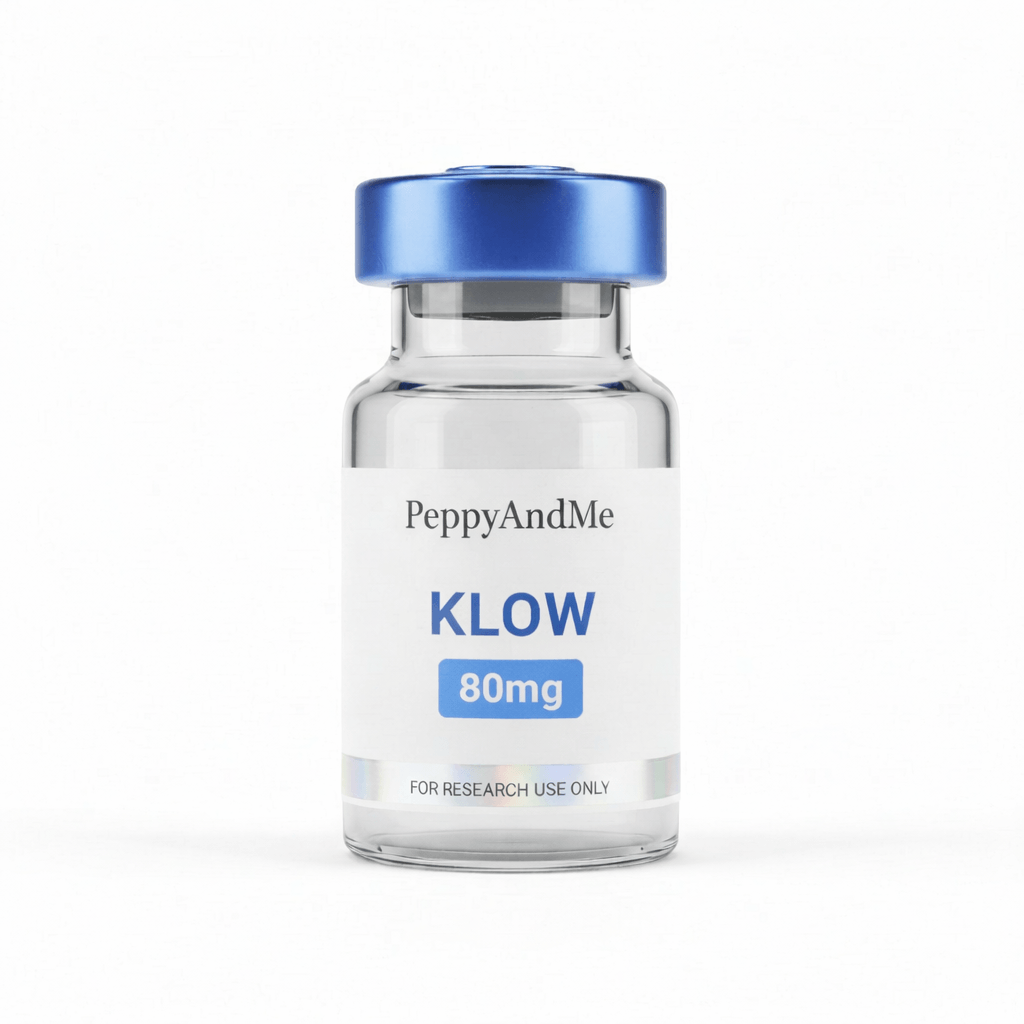
Klow peptide blend for research is formulated as a multi-component peptide system combining GHK-Cu (Copper Peptide), BPC-157, Thymosin Beta-4, and KPV (Lys-Pro-Val). This advanced blend is designed for laboratory investigation of cellular signaling, structural regulation, and inflammatory pathway modulation across complex biological systems.
To begin with, GHK-Cu actively influences gene expression associated with collagen synthesis, extracellular matrix organization, and antioxidant response systems. Because of this, researchers frequently use it in models focused on structural protein dynamics and cellular repair signaling. In addition, its regulatory effects make it relevant in studies examining cellular balance and oxidative stress pathways.
At the same time, BPC-157 engages with nitric oxide signaling and angiogenic pathways. As a result, it supports laboratory research involving vascular response mechanisms and cellular communication. Moreover, researchers explore how it enhances adaptive responses and signaling efficiency under controlled experimental conditions. Therefore, it remains highly relevant in studies involving tissue modeling and biological resilience.
Meanwhile, Thymosin Beta-4 regulates actin dynamics, which control cellular migration, intracellular transport, and structural organization. Because of this, researchers include it in models examining coordinated cellular movement and protein signaling cascades. In addition, it allows deeper exploration of structural adaptation within complex biological environments.
Most importantly, KPV is studied for its interaction with inflammatory signaling pathways, including cytokine modulation and immune response regulation. As a result, researchers investigate its role in maintaining cellular stability and reducing signaling imbalances in experimental models. Furthermore, KPV contributes to research focused on barrier function, cellular protection, and biochemical equilibrium.
Ultimately, when combined, Klow peptide blend for research creates a highly synergistic interaction across regeneration, signaling coordination, and inflammatory pathway regulation. For this reason, this blend continues to gain attention in advanced laboratory research focused on complex biological systems and multi-pathway interaction models. For related compounds, explore GHK-Cu peptide, BPC-157 peptide, Thymosin Beta-4 peptide, and KPV peptide.
Research Applications
- Cellular signaling pathway analysis
- Inflammatory response and cytokine modulation studies
- Extracellular matrix and collagen regulation research
- Angiogenic and vascular response investigations
- Cellular migration and actin dynamics modeling
- Tissue regeneration and repair pathway exploration
- Oxidative stress and antioxidant response evaluation
- Barrier function and cellular stability studies
Laboratory Handling Directions
- Store at controlled room temperature (15–25°C / 59–77°F)
- Protect from light and moisture during storage
- Use aseptic technique when handling compound
- Reconstitute with sterile or bacteriostatic water as appropriate
- Once reconstituted, refrigerate at 2–8°C (36–46°F)
- Document all handling procedures per laboratory protocols
Critical Compliance Notice
FOR RESEARCH USE ONLY. This product is sold strictly for in-vitro laboratory research, educational purposes, and scientific investigation. It is NOT intended for human or veterinary use. By purchasing this product, the buyer confirms they are a qualified researcher and assumes full responsibility for ensuring compliance with all applicable regulations.
Scientific References

Reviews
There are no reviews yet.