Peppyandme: Research Peptides Explained for Health Enthusiasts
Peppyandme is defined as a premium, membership-based research peptide platform that supplies lab-verified compounds with 99%+ purity to authorized researchers, fitness enthusiasts, and health-conscious professionals. All Peppyandme products carry third-party Certificates of Analysis (COAs) confirming sterility, endotoxin levels, and heavy metal content, and the platform ships same-day within the United States for orders placed before 2 PM. Products are designated for research and educational use only, not for human or veterinary consumption. For anyone working in peptide research or health optimization, understanding what Peppyandme offers and how to use it responsibly is the starting point for credible, compliant work.
How does Peppyandme ensure peptide quality and purity?
Peppyandme’s quality assurance model is built on supplier vetting, independent laboratory testing, and full traceability from manufacturer to warehouse. Every batch carries a traceable lot and batch number, so researchers can verify the origin and handling history of any compound they receive. This level of documentation is not standard across the research peptide industry, which makes it a meaningful differentiator for professionals who need reliable, reproducible results.
Third-party testing covers five critical parameters:
- Purity: Verified at 99%+ using high-performance liquid chromatography (HPLC) methods
- Mass accuracy: Confirmed by mass spectrometry to validate molecular identity
- Sterility: Tested to confirm the absence of microbial contamination
- Endotoxins: Screened using Limulus Amebocyte Lysate (LAL) assays to detect bacterial byproducts
- Heavy metals: Analyzed to rule out toxic elemental contamination
Third-party endotoxin testing is particularly significant because endotoxin contamination is one of the most common sources of confounded results in peptide research. A batch that passes purity testing but fails endotoxin screening can produce inflammatory artifacts in cell-based assays, skewing data in ways that are difficult to trace back to the source.
Packaging and cold-chain protocols preserve peptide integrity during transit. Lyophilized (freeze-dried) peptides are shipped in sealed, light-protected vials to minimize degradation from heat, moisture, and UV exposure.
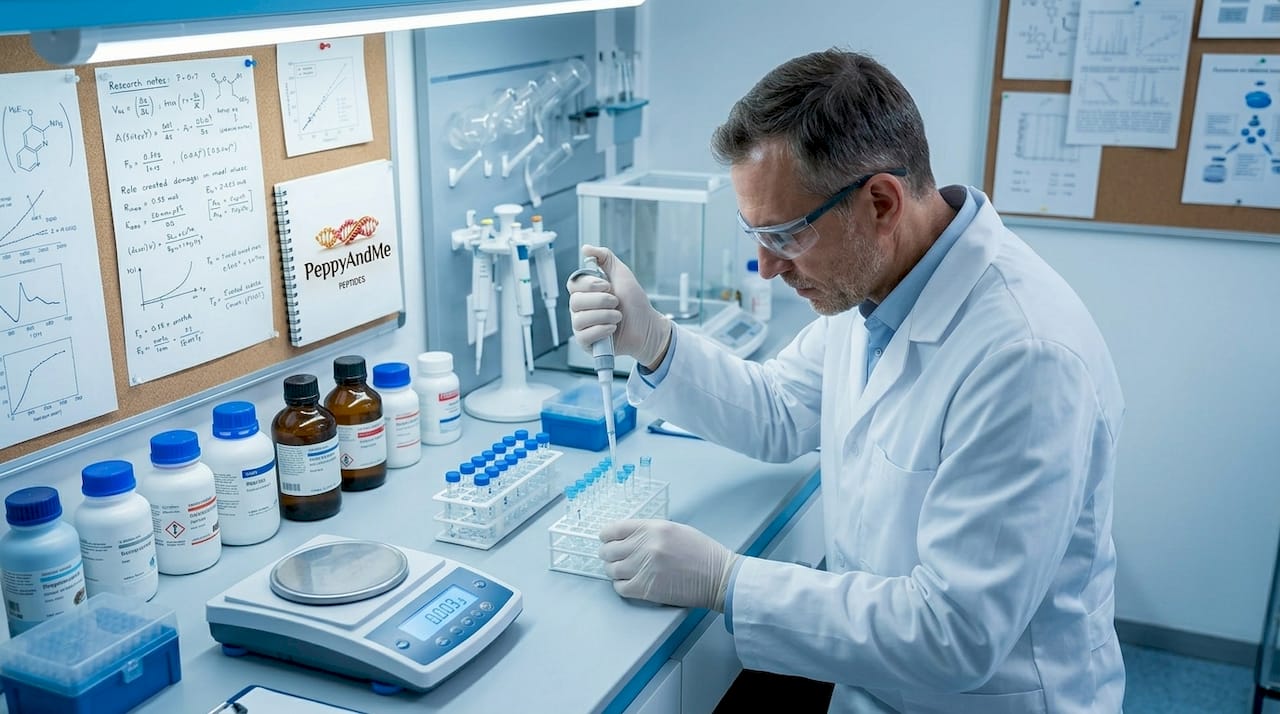
Pro Tip: When reviewing a COA from any supplier, check that the testing laboratory is independent and not affiliated with the manufacturer. Peppyandme provides COAs from third-party labs, which means the data has not been generated by the same entity selling the product. This distinction matters for research integrity.
What are the common research uses of peptides from Peppyandme?
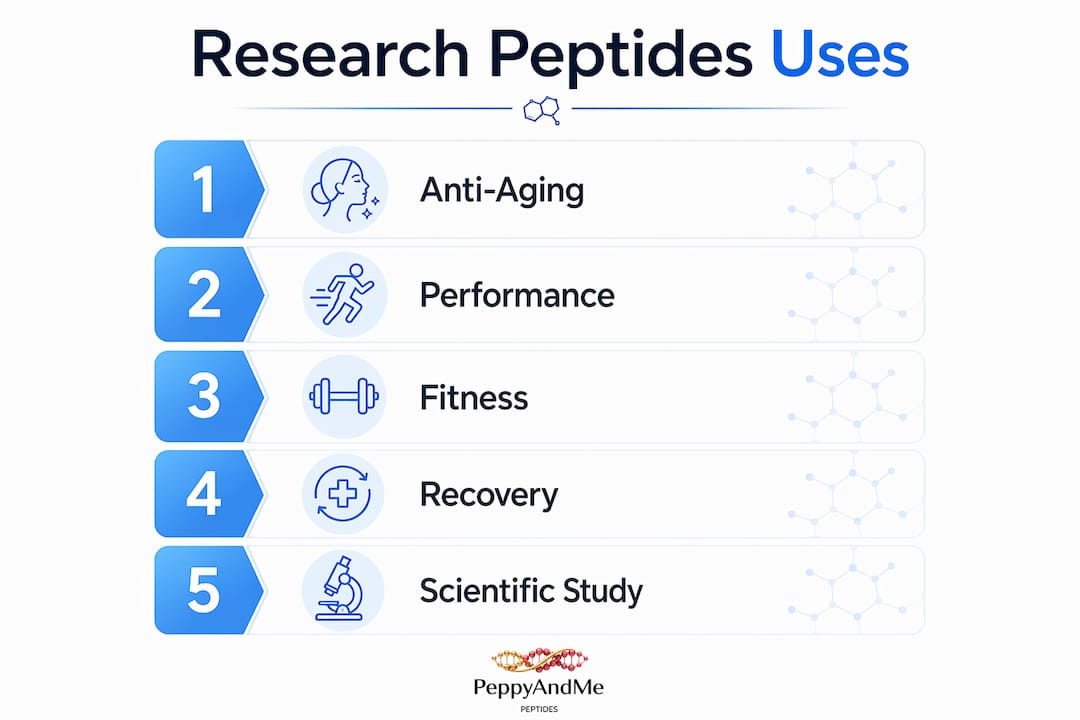
Research peptides are short chains of amino acids that act as signaling molecules, influencing processes such as cell regeneration, metabolic regulation, and tissue repair at the molecular level. Researchers and health-focused professionals study these compounds to understand their potential roles in biological systems, particularly in the context of aging and physical performance.
Peppyandme’s catalog includes compounds commonly studied in the following research areas:
- Growth hormone secretagogues such as Ipamorelin and CJC-1295, studied for their role in stimulating growth hormone release pathways
- Tissue repair peptides such as BPC-157 and TB-500, examined for their effects on connective tissue and recovery mechanisms
- Metabolic peptides such as Tirzepatide analogs, researched for their influence on insulin signaling and energy metabolism
- Anti-aging compounds such as Epithalon, studied for telomere-related cellular mechanisms
Important distinction: Research findings on these compounds in preclinical or in vitro settings do not translate directly to clinical outcomes in humans. Peppyandme products are supplied strictly for research and educational purposes. Interpreting laboratory data as evidence of therapeutic benefit for human use is a misapplication of the research context.
Fitness researchers and health enthusiasts often approach peptide science with a strong interest in anti-aging and performance optimization. The responsible framework is to treat research data as hypothesis-generating rather than conclusive. Differentiating peptide research from clinical therapeutics is the single most important conceptual boundary for anyone working in this space. Peppyandme’s educational resources, including its peptide glossary and dose calculator, are designed to support that distinction.
What are the regulatory and safety considerations for research peptides?
Research peptides carry a “Research Use Only” (RUO) designation, which means they are not approved by the U.S. Food and Drug Administration (FDA) for human therapeutic use. This is a legal and scientific classification, not a commentary on compound quality. Understanding the difference between RUO status and pharmaceutical approval is non-negotiable for compliant research practice.
The table below clarifies the key distinctions:
| Feature | Research peptides (RUO) | Pharmaceutical peptides |
|---|---|---|
| FDA approval status | Not approved | Approved after clinical trials |
| Intended use | Laboratory and educational research | Human therapeutic treatment |
| Labeling requirements | “For research use only” | Full prescribing information required |
| Clinical evidence | Preclinical or limited | Phase I, II, III trial data |
| Compounding regulations | Not applicable | Governed by 503A and 503B pharmacy rules |
| Purity standards | Third-party COA verified | GMP-certified manufacturing |
The FDA’s regulatory framework for peptide therapeutics is molecule-centric and requires extensive clinical trial data, manufacturing validation, and commercial investment before approval. Many naturally occurring or difficult-to-patent peptides receive limited pharmaceutical development funding, not because they lack scientific interest, but because the approval pathway requires resources that are rarely available without commercial incentive.
RUO peptides do not equate to FDA-approved drugs or human-safe therapeutics, regardless of batch purity. A COA confirming 99%+ purity verifies chemical identity and absence of contaminants. It does not establish safe dosing ranges, pharmacokinetic profiles, or therapeutic efficacy in humans. Researchers who conflate these two categories introduce both legal and scientific risk into their work.
Peppyandme’s platform addresses this directly by providing clear disclosures on every product page and supporting researchers through its research compliance resources to maintain ethical and legal standards.
Pro Tip: If you are a researcher working within an institutional setting, consult your Institutional Review Board (IRB) or ethics committee before incorporating any RUO compound into a study protocol. Compliance documentation protects both the researcher and the institution.
How to safely handle and use Peppyandme peptides in research
Proper handling of research peptides is not optional. Contamination, improper storage, or inaccurate reconstitution can invalidate experimental results and waste resources. Lab protocols for peptide handling must minimize contamination risk and maintain molecular integrity to produce valid research outcomes.
Follow these steps for safe and effective peptide research:
- Store lyophilized peptides correctly. Keep sealed vials at minus 20 degrees Celsius or lower, away from light and moisture. Once reconstituted, store solutions at 4 degrees Celsius and use within the manufacturer’s recommended window, typically 30 days.
- Use bacteriostatic water for reconstitution. Bacteriostatic water (containing 0.9% benzyl alcohol) inhibits microbial growth in reconstituted solutions. Sterile water is appropriate only for single-use preparations.
- Apply sterile technique throughout. Use alcohol-swabbed vial tops, sterile syringes, and a clean workspace. Avoid touching needle tips or vial openings. Work in a laminar flow hood when available.
- Calculate concentrations precisely. Use Peppyandme’s built-in peptide dose calculator to determine the correct volume for your target concentration. Errors at this step compound across an entire experiment.
- Document every preparation. Record the lot number, reconstitution date, solvent used, and storage location for each vial. This documentation supports reproducibility and compliance.
- Dispose of materials properly. Used syringes and vials are sharps waste. Follow your institution’s or local jurisdiction’s biohazard disposal protocols.
Common mistakes in peptide research include using tap water or saline for reconstitution (which can cause aggregation or degradation), storing reconstituted solutions at room temperature, and failing to verify concentration calculations before use. Each of these errors produces data artifacts that are difficult to identify after the fact.
Pro Tip: Peppyandme’s peptide glossary is a practical reference for understanding reconstitution protocols, storage conditions, and handling notes specific to individual compounds. Consulting it before working with an unfamiliar peptide takes minutes and prevents costly errors.
Key takeaways
Peppyandme provides research-grade peptides with verified purity, transparent COA documentation, and same-day U.S. shipping, making it a reliable source for researchers who require consistency and traceability in their work.
| Point | Details |
|---|---|
| Verified purity standard | All Peppyandme compounds are tested at 99%+ purity with third-party COAs covering sterility and endotoxins. |
| RUO designation matters | Research Use Only status means these peptides are not FDA-approved for human therapeutic use. |
| Regulatory distinction is critical | Pharmaceutical approval requires clinical trials and commercial investment that RUO compounds do not undergo. |
| Safe handling is non-negotiable | Sterile technique, correct storage, and precise reconstitution protect both research integrity and researcher safety. |
| Educational tools support compliance | Peppyandme’s dose calculator and peptide glossary help researchers apply compounds correctly within a research context. |
Peppyandme’s place in the evolving peptide research landscape
From our position at Peppyandme, the most consistent challenge we observe among new researchers is not sourcing quality compounds. It is understanding what quality documentation actually means in practice. A COA is a starting point, not a finish line. Researchers who treat a clean purity report as permission to extrapolate clinical conclusions are misreading the data, and that misreading creates real risk.
What we have found over time is that the researchers who get the most value from our platform are those who approach peptide science with structured curiosity. They use our glossary to understand mechanism before they design an experiment. They use the dose calculator to eliminate arithmetic error from their workflow. They read the regulatory context before they source a compound. That disciplined approach is what separates credible research from anecdote.
The peptide research field is moving quickly. Compounds like BPC-157, Epithalon, and various growth hormone secretagogues are attracting serious preclinical attention, and the gap between research interest and clinical evidence remains wide. That gap is not a failure of the science. It reflects the financial and regulatory reality that naturally occurring peptides rarely attract the commercial investment needed to fund Phase III trials. Researchers who understand this context produce more honest, more useful work.
Our commitment at Peppyandme is to supply the compounds, the documentation, and the educational infrastructure that makes that kind of rigorous work possible. The science deserves that standard.
— Peppy&Me
Start your peptide research with Peppyandme
Peppyandme maintains one of the most thoroughly documented research peptide catalogs available to authorized researchers in the United States. Every compound is third-party tested for purity, sterility, endotoxins, and heavy metals, with full COA transparency and traceable lot numbers from manufacturer to warehouse.
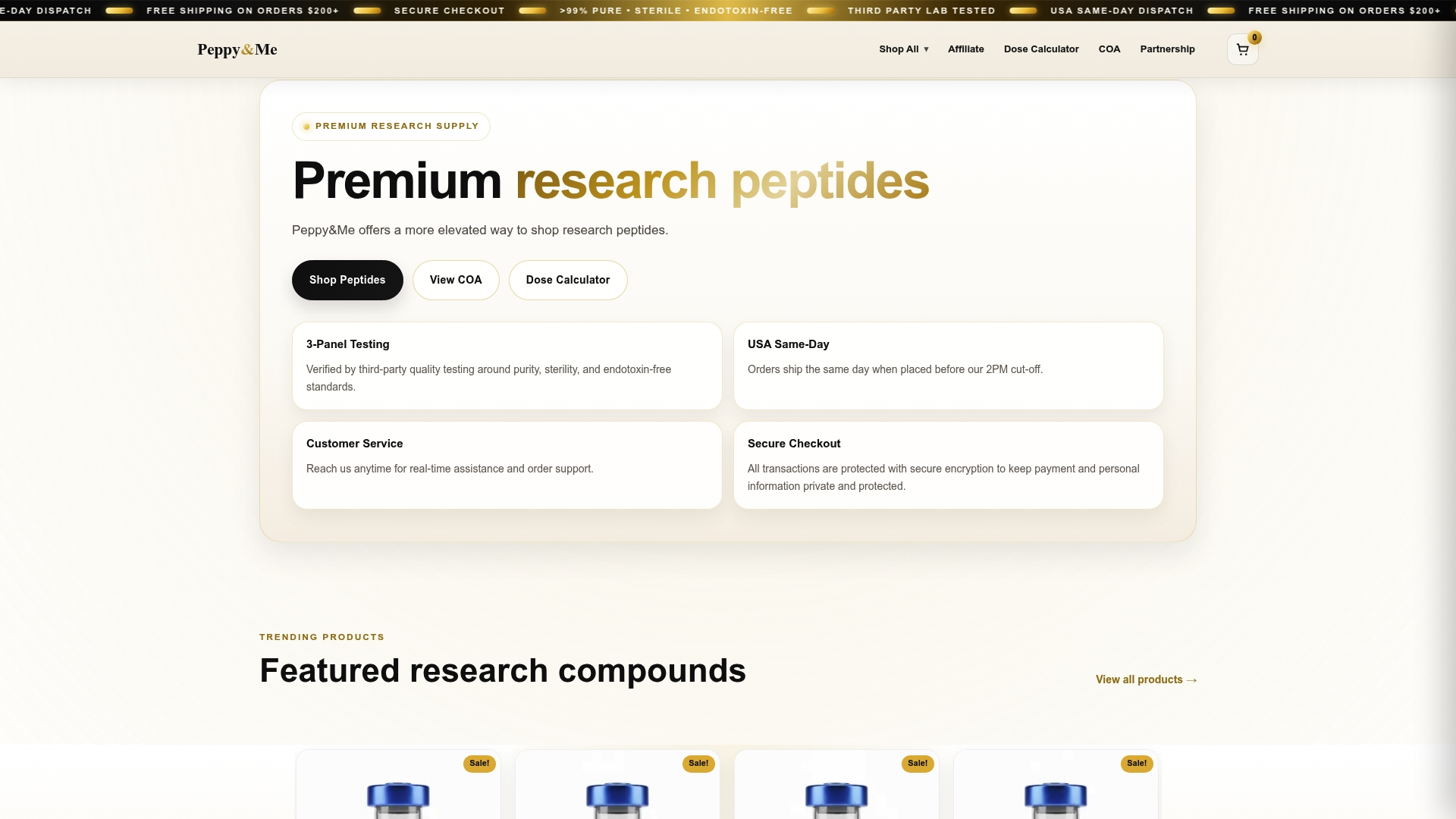
For researchers and health-conscious professionals who need reliable compounds and fast turnaround, Peppyandme offers same-day shipping on orders placed before 2 PM, real-time customer support, and a secure checkout system that does not share customer data. Whether you are sourcing a single compound or building a research program, the peptide sourcing guide on the platform walks you through supplier standards, COA interpretation, and handling protocols to support compliant, reproducible work.
FAQ
What is Peppyandme and who is it for?
Peppyandme is a membership-based research peptide platform supplying lab-verified compounds to authorized researchers, fitness professionals, and health-conscious individuals. All products are designated for research and educational use only, not for human consumption.
Are Peppyandme peptides FDA-approved?
No. Peppyandme products carry a Research Use Only (RUO) designation and are not FDA-approved for human therapeutic use. FDA approval requires extensive clinical trials and commercial investment that RUO compounds do not undergo.
How does Peppyandme verify peptide purity?
Peppyandme uses independent third-party laboratories to test each batch for purity, mass accuracy, sterility, endotoxins, and heavy metals. COA documentation is provided with traceable lot and batch numbers for full transparency.
How should research peptides from Peppyandme be stored?
Lyophilized peptides should be stored at minus 20 degrees Celsius in sealed, light-protected vials. Once reconstituted, solutions should be kept at 4 degrees Celsius and used within the recommended timeframe, following established lab protocols for sterile handling.
Can Peppyandme peptides be used for anti-aging treatments?
No. Peppyandme compounds are supplied strictly for research and educational purposes. Preclinical research data on anti-aging peptides does not constitute clinical evidence of therapeutic benefit, and using RUO compounds as human treatments falls outside both legal and scientific boundaries.