BACS Water: Benefits, Uses, and How It Works

If you’ve spent any time researching peptide protocols, you’ve likely encountered the term “BACS water” and wondered exactly what it refers to. The abbreviation stands for bacteriostatic water, a pharmaceutical-grade solvent preserved with 0.9% benzyl alcohol. It is not simply purified or distilled water. BACS water serves a specific, well-established purpose in research and wellness contexts: reconstituting lyophilized (freeze-dried) peptides and compounds for multi-dose use. Understanding what sets it apart from other solvents is the first step toward safer, more effective peptide handling.
Table of Contents
- Key takeaways
- What BACS water is and how it works
- Uses and benefits of BACS water in peptide research
- Proper handling, storage, and safety practices
- Comparing BACS water to other solvents
- Choosing high-quality BACS water
- My perspective on BACS water and where researchers go wrong
- Where to source quality BACS water and peptide supplies
- FAQ
Key takeaways
| Point | Details |
|---|---|
| BACS water = bacteriostatic water | It contains 0.9% benzyl alcohol, which inhibits bacterial growth in multi-dose vials. |
| Multi-dose advantage | The preservative allows repeated vial punctures over a 28-day window after first use. |
| Sterile technique still required | Benzyl alcohol slows bacterial growth but does not replace proper aseptic handling. |
| Discard rule is strict | Label vials with the first puncture date and discard after 28 days, regardless of remaining volume. |
| Quality sourcing matters | Pharmaceutical-grade, third-party tested BACS water with USP compliance is the standard for research use. |
What BACS water is and how it works
The term BACS water is commonly used in peptide research communities to refer to bacteriostatic water, a sterile formulation composed of Water for Injection (WFI) plus 0.9% benzyl alcohol as a preservative. The pH typically falls between 4.5 and 7.0, which is compatible with most research-grade peptides and compounds.
The critical distinction lies in what benzyl alcohol actually does. It acts as a bacteriostatic agent, meaning it inhibits bacterial reproduction rather than killing bacteria outright. This is an important nuance. The preservative does not sterilize a contaminated vial. It slows microbial growth enough to make the solution safe for repeated use over a defined window of time.
Here is how BACS water compares to plain sterile water at a formulation level:
- Sterile Water for Injection: No preservative, no benzyl alcohol, single-use only
- Bacteriostatic water (BACS water): 0.9% benzyl alcohol, multi-dose use approved for up to 28 days post-puncture
- Normal saline (0.9% NaCl): Contains sodium chloride, no preservative, typically single-use
- Distilled or tap water: Not sterile, not pharmaceutical grade, never appropriate for injection-related research
Pharmaceutical-grade BACS water must meet USP standards covering sterility, endotoxin limits, and benzyl alcohol concentration. Products meeting these standards are pyrogen-free and pH-controlled, which matters considerably when working with sensitive peptide compounds.
Pro Tip: When evaluating any BACS water product, request the Certificate of Analysis (CoA) confirming benzyl alcohol concentration, endotoxin levels, and sterility testing. If a supplier cannot provide this documentation, look elsewhere.
Uses and benefits of BACS water in peptide research
The primary application of bacteriostatic water in wellness and research contexts is the reconstitution of lyophilized peptides. Freeze-drying preserves peptides in a stable, powdered form, but they must be dissolved in an appropriate solvent before use. BACS water is the standard solvent for this purpose across a wide range of research compounds.
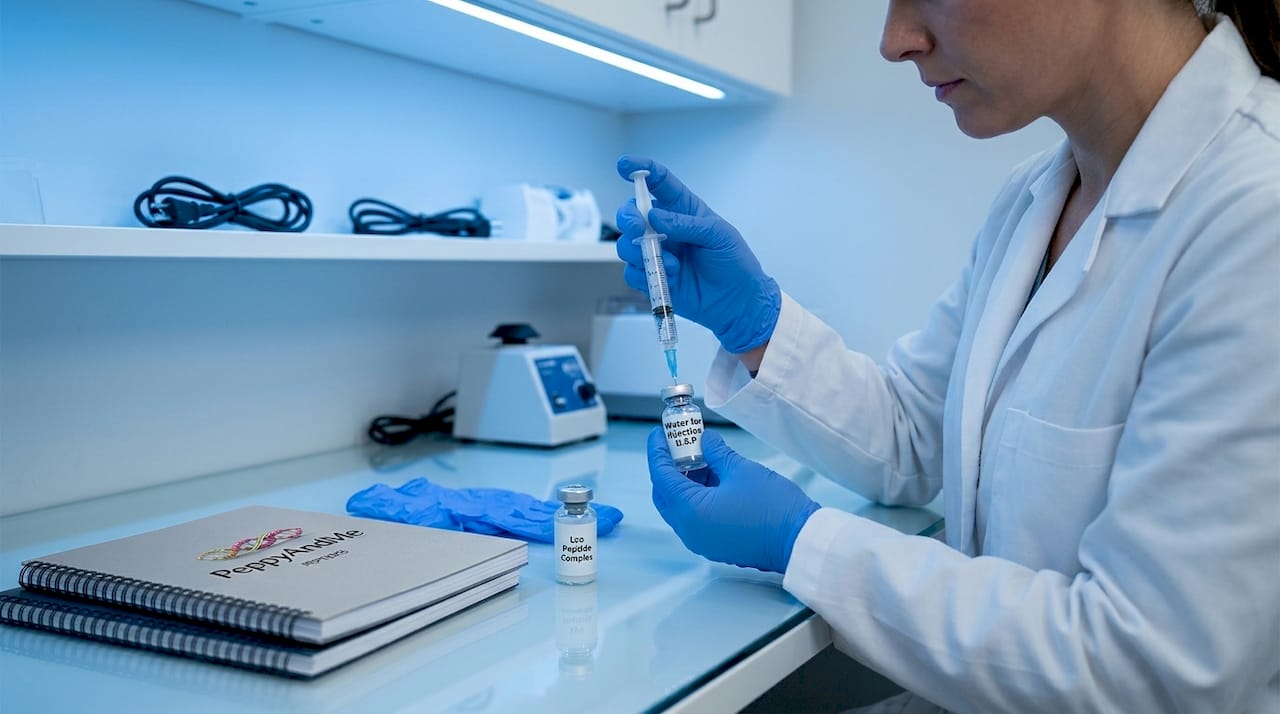
Peptides commonly reconstituted with bacteriostatic water include BPC-157, TB-500, Semax, NAD+, PT-141, and Epitalon, among others. Each of these compounds requires careful dissolution to maintain structural integrity and research-grade purity. Using an inappropriate solvent, such as tap water or non-sterile distilled water, introduces contamination risks that can compromise both the compound and the research outcome.
The multi-dose advantage of BACS water is where it genuinely separates itself from alternatives. Here is why that matters in practice:
- A typical research peptide vial may contain enough lyophilized compound for several doses over days or weeks.
- Each time you draw from the vial, you puncture the rubber stopper with a needle.
- Without a preservative, every puncture creates a contamination risk that accumulates over time.
- The benzyl alcohol in BACS water suppresses microbial growth between uses, making repeated access to the same vial safer and more practical.
- This reduces waste, lowers cost per dose, and simplifies multi-week research protocols.
“The preservative in bacteriostatic water is not a substitute for sterile technique. It is a safety buffer that extends the usable life of a reconstituted vial. Treat it as an additional layer of protection, not the primary one.”
From a cost and convenience standpoint, BACS water is widely available and well-standardized, making it a practical choice for researchers who need reliable, repeatable results. Its compatibility with most peptide compounds and its pharmaceutical-grade consistency make it the default solvent in most peptide handling protocols.
Proper handling, storage, and safety practices
Knowing how BACS water works is only part of the equation. How you handle and store it determines whether the preservative does its job effectively.
Storage after first use
Once a vial of bacteriostatic water has been punctured, it must be refrigerated at 2 to 8 degrees Celsius. Room temperature storage after opening accelerates degradation and reduces the preservative’s effectiveness. The same refrigeration requirement applies to reconstituted peptide solutions.
The 28-day discard rule
This is non-negotiable. Label every vial with the date of first puncture and discard it 28 days later, regardless of how much solution remains. The benzyl alcohol’s bacteriostatic efficacy diminishes over time, and continuing to use a vial beyond this window introduces unacceptable contamination risk.
Sterile technique is not optional
The most common mistake researchers make is assuming that the preservative compensates for poor aseptic handling. It does not. Contamination risk remains real even with bacteriostatic water if proper technique is not followed. Key practices include:
- Swab vial stoppers with 70% isopropyl alcohol before every needle insertion
- Use a new, sterile needle and syringe for each draw
- Work in a clean, low-traffic environment to minimize airborne contamination
- Never touch needle tips or allow them to contact non-sterile surfaces
- Store reconstituted vials away from light exposure, which can degrade both the peptide and the solvent
Pro Tip: Use a permanent marker or a small adhesive label to write the puncture date directly on the vial. A simple habit like this prevents accidental overuse and keeps your protocol organized across multiple compounds.
Reviewing lab best practices for peptide research before beginning any reconstitution protocol is a worthwhile investment of time. The margin for error in sterile handling is smaller than most people assume.
Comparing BACS water to other solvents
Understanding when to use BACS water requires knowing what the alternatives offer and where they fall short. The table below summarizes the key differences:
| Solvent | Preservative | Multi-dose use | Typical application |
|---|---|---|---|
| Bacteriostatic water (BACS) | 0.9% benzyl alcohol | Yes, up to 28 days | Peptide reconstitution, multi-dose research vials |
| Sterile Water for Injection | None | No, single-use only | Single-dose compounds, specific pH-sensitive peptides |
| Normal saline (0.9% NaCl) | None | No, single-use only | IV preparations, specific clinical applications |
| Distilled water | None | No | Industrial, non-injection use only |
| Tap water | None | No | Never appropriate for research injection use |
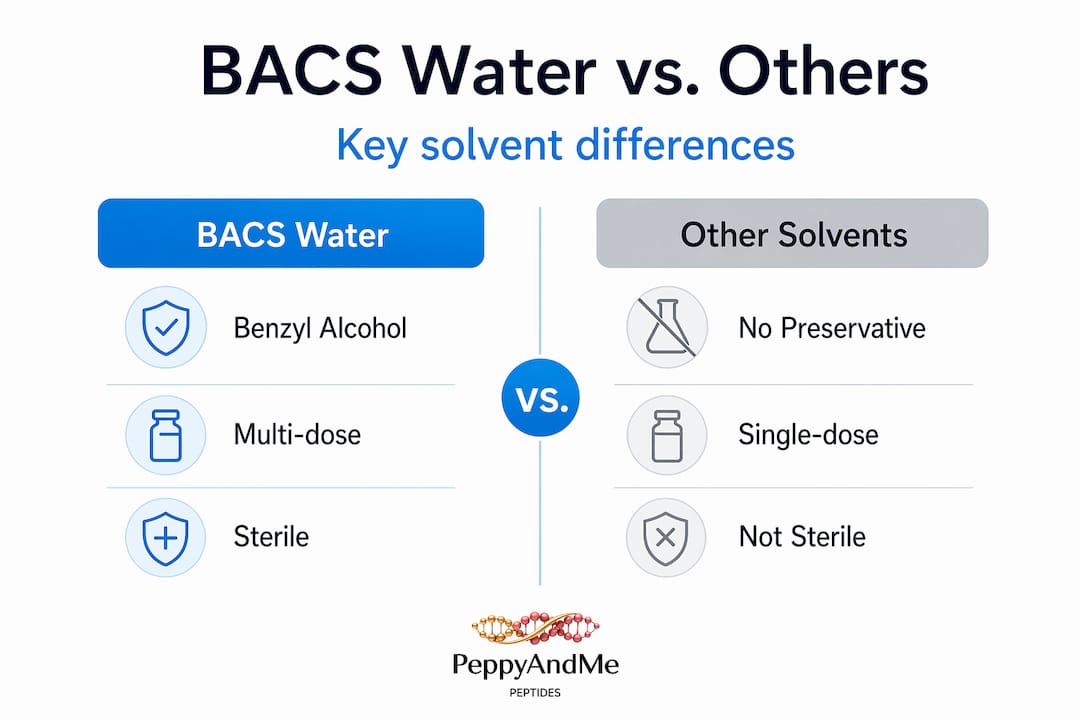
The multi-dose distinction is the defining factor for most peptide research contexts. If your protocol involves drawing from the same vial multiple times over days or weeks, BACS water is the appropriate choice. Sterile water for injection remains the correct option for certain pH-sensitive compounds or single-dose preparations where benzyl alcohol compatibility is a concern.
Distilled and tap water carry unacceptable contamination and particulate risks. They are never appropriate for any injection-adjacent research application, regardless of how they are processed or filtered at home. The gap between “filtered” and “pharmaceutical-grade sterile” is significant and should not be underestimated.
For researchers who want a deeper look at how sterile water compares to bacteriostatic water across different peptide types, that distinction becomes especially relevant when working with compounds that are sensitive to benzyl alcohol or require a neutral pH environment.
Choosing high-quality BACS water
Not all bacteriostatic water products are equivalent. The sourcing and quality verification of your BACS water directly affects the safety and integrity of your research. Here is what to look for when selecting a product:
- USP compliance: The product should meet United States Pharmacopeia standards for sterility, endotoxin limits, and preservative concentration.
- Third-party testing: Independent lab verification of benzyl alcohol concentration, pH, sterility, and pyrogen content adds a layer of accountability that manufacturer claims alone cannot provide.
- Certificate of Analysis: Every batch should come with a traceable CoA that includes lot and batch numbers, allowing you to verify the specific vial you are using.
- Packaging integrity: Multi-dose vials with intact rubber stoppers and tamper-evident seals are standard. Avoid any product with damaged packaging or unclear labeling.
- Benzyl alcohol concentration validation: Confirm the 0.9% concentration specifically. Products outside this range may not provide adequate bacteriostatic protection or may exceed safe thresholds for certain applications.
- Supplier transparency: A trustworthy supplier will publish testing documentation, respond to quality inquiries, and maintain clear traceability from manufacturer to warehouse.
Pharmaceutical-grade BACS water meeting these criteria, such as formulations verified against USP pyrogen-free standards, represents the baseline for responsible research use. Cost-cutting on solvent quality is one of the most counterproductive decisions a researcher can make, given how directly solvent integrity affects every downstream result.
My perspective on BACS water and where researchers go wrong
In my experience working with peptide research communities, the most persistent misunderstanding about bacteriostatic water is the belief that the preservative does the heavy lifting on safety. Researchers sometimes treat the 0.9% benzyl alcohol as a failsafe. It is not.
What I’ve seen repeatedly is that poor vial management, skipped alcohol swabs, and reused needles create contamination problems that the preservative simply cannot address. The benzyl alcohol buys you time between uses. It does not undo contamination that was introduced during handling.
What I’ve learned is that the 28-day discard rule feels wasteful to many researchers, especially when significant volume remains in a vial. But treating that rule as optional is how contamination events happen. Labeling vials and rotating stock systematically is not bureaucratic overhead. It is the difference between reliable research outcomes and compromised results.
My take on sourcing is straightforward: spend the extra few dollars on pharmaceutical-grade, third-party verified BACS water. The cost difference between a quality product and a questionable one is negligible compared to the cost of a compromised peptide batch or a failed protocol.
Responsible handling is not a secondary concern. It is the foundation on which every other aspect of peptide research rests.
— Peppy&Me
Where to source quality BACS water and peptide supplies
For researchers who want pharmaceutical-grade bacteriostatic water backed by independent testing, Peppyandme offers verified products with full traceability from manufacturer to warehouse. Every product undergoes third-party analysis covering purity, sterility, endotoxin levels, and heavy metal screening, with lot and batch numbers available for review.
Peppyandme also provides a built-in peptide dose calculator and a comprehensive peptide glossary to support accurate reconstitution and protocol planning. For researchers exploring premium research peptides alongside quality BACS water, same-day U.S. shipping is available for orders placed before 2 PM. If you are also comparing cost-effective options, the discounted peptide catalog includes lab-verified compounds at competitive price points. Peppyandme’s commitment to transparency and quality makes it a reliable starting point for any research protocol.
FAQ
What does BACS water stand for?
BACS water is a shorthand term used in peptide research communities to refer to bacteriostatic water, a sterile solution containing 0.9% benzyl alcohol as a preservative. The benzyl alcohol inhibits bacterial growth, making the solution safe for multi-dose use over a 28-day period after first puncture.
How long can you use BACS water after opening?
Once a vial of bacteriostatic water is first punctured, it should be refrigerated at 2 to 8 degrees Celsius and discarded after 28 days, regardless of remaining volume. Using it beyond this window reduces preservative efficacy and increases contamination risk.
Can you use distilled or tap water instead of BACS water?
No. Distilled and tap water are not sterile and do not meet pharmaceutical-grade standards required for injection-adjacent research use. Only pharmaceutical-grade bacteriostatic water or sterile water for injection should be used for peptide reconstitution.
Does benzyl alcohol in BACS water kill bacteria?
Benzyl alcohol is bacteriostatic, not bactericidal. It inhibits bacterial reproduction but does not kill bacteria already present. This is why proper sterile technique remains mandatory even when using bacteriostatic water.
What peptides are typically reconstituted with BACS water?
Bacteriostatic water is the standard solvent for reconstituting a wide range of research peptides, including BPC-157, TB-500, Semax, NAD+, PT-141, and Epitalon. Its compatibility, multi-dose preservation, and pharmaceutical-grade consistency make it the preferred choice across most peptide research protocols.