Peppy and Me: Research Peptides for Health Optimization
Peppy and Me, the platform known as Peppyandme, is a premium research peptide supplier providing third-party verified compounds for individuals exploring health optimization, fitness enhancement, and anti-aging strategies. Every product on the platform ships with a Certificate of Analysis (COA) confirming purity, sterility, endotoxin levels, and heavy metal content, with traceable lot and batch numbers from manufacturer to warehouse. Peppyandme positions itself as a trusted research partner by combining third-party COA transparency with same-day U.S. shipping for orders placed before 2 PM. All peptides are sold strictly for research use only (RUO), not as FDA-approved drugs, and this distinction matters enormously for anyone serious about compliant, informed exploration.
What are Peppy and Me research peptides and how do they differ from FDA-approved options?
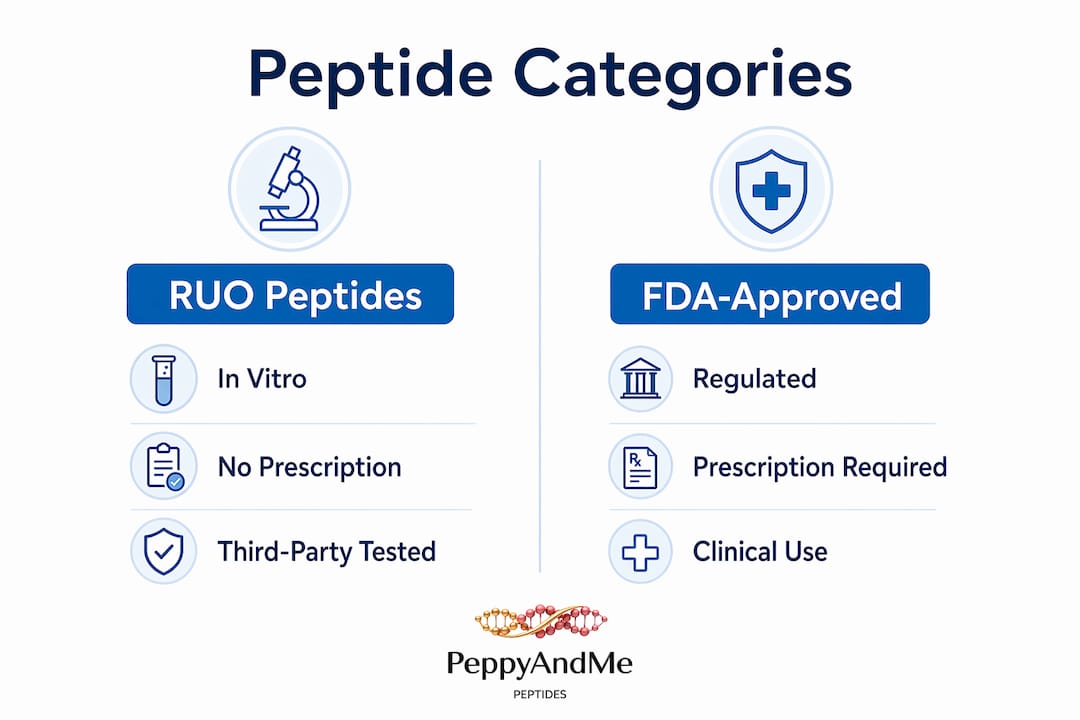
Research-use-only (RUO) peptides are amino acid chains synthesized for in-vitro and exploratory scientific study, not for clinical treatment or general wellness supplementation. The RUO designation is a market label, not a regulatory approval or safety guarantee for human use. FDA enforcement considers the intended use of a product beyond its label, meaning vendors who imply human use applications can face regulatory scrutiny regardless of how the product is marketed.
No FDA-approved peptides currently exist for general anti-aging or longevity purposes as of 2026. FDA-approved peptide drugs, such as insulin or semaglutide, are approved for specific clinical indications only. The approval process requires massive financial investment, large-scale clinical trials, and commercial backing, which is why naturally occurring or difficult-to-patent peptide compounds often receive less funding despite ongoing scientific interest.
A third category, 503A compounded peptides, occupies a middle ground. These require a valid prescription and are subject to pharmacy board oversight, but they do not carry full FDA drug approval. Compounded peptides differ from RUO materials in both legal status and quality controls, and researchers should understand these distinctions before sourcing any compound.
The table below summarizes the key differences across these three categories.
| Category | Regulatory status | Requires prescription | Quality oversight |
|---|---|---|---|
| FDA-approved peptides | Full FDA approval for specific indications | Yes | Rigorous clinical and manufacturing standards |
| 503A compounded peptides | Pharmacy board oversight, no full FDA approval | Yes | Compounding pharmacy standards |
| RUO research peptides | Market label only, no regulatory approval | No | Supplier-dependent; third-party COA critical |
Understanding where RUO peptides sit in this framework is the foundation of responsible research. Peppyandme makes this framework accessible through its peptide research guides and educational resources, so users can make informed decisions from the start.
What tools and materials are needed to prepare Peppy and Me peptides safely?
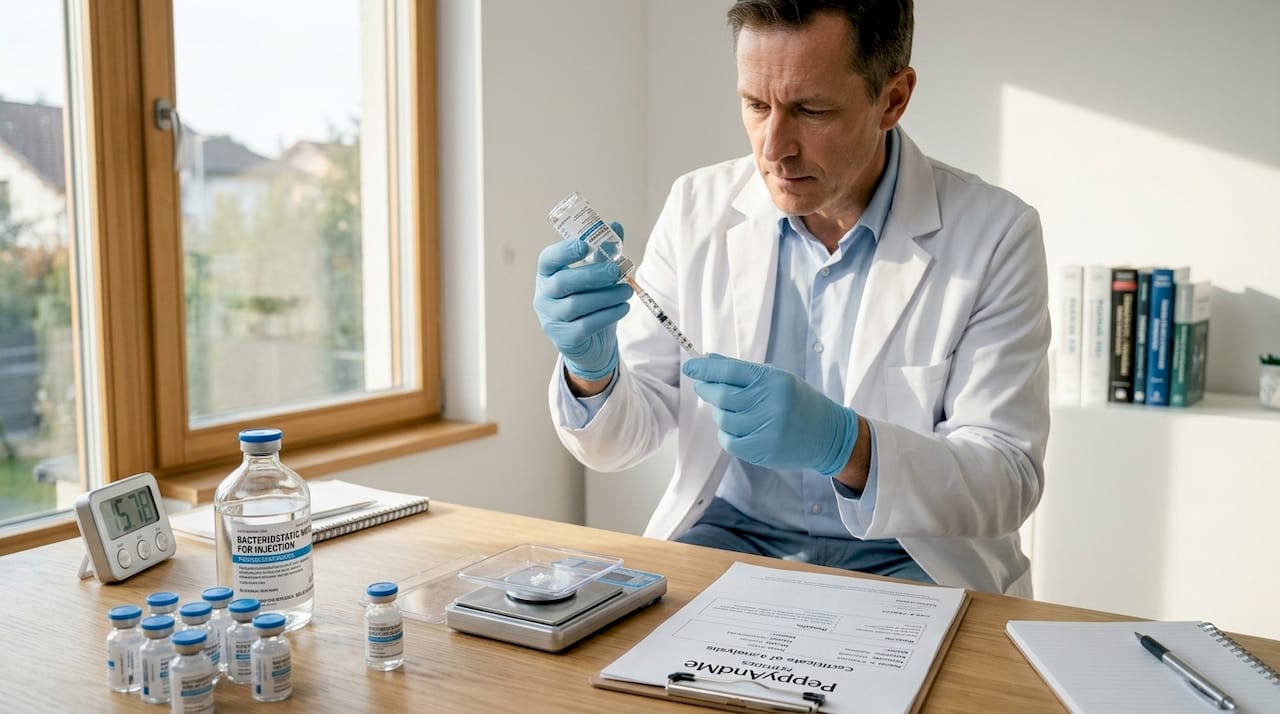
Accurate peptide preparation requires specific equipment and a disciplined approach to sterile technique. Cutting corners on materials or skipping COA verification introduces variables that undermine research integrity and, more importantly, safety. The following items are required before reconstituting any lyophilized peptide from Peppyandme.
- Insulin syringes (typically 1 mL, U-100 calibration) for precise volume measurement
- Bacteriostatic water as the standard diluent for reconstitution and extended storage stability
- Sterile vials for transferring and storing reconstituted solutions
- Alcohol swabs for sterilizing vial tops and injection ports before every use
- Printed or digital labels with peptide name, concentration, reconstitution date, and expiration
- Peppyandme’s COA documentation for each batch, confirming purity, sterility, and endotoxin levels
- The Peppyandme peptide dose calculator for accurate reconstitution math
The COA review step deserves particular attention. Accurate peptide dosing depends on vial mass, reconstitution volume, and a clear understanding of mg versus mcg units alongside syringe calibration. Errors in this step are among the most common sources of dosing mistakes in peptide research, and a dose calculator eliminates most of them.
Pro Tip: When reading a U-100 insulin syringe, each unit marking equals 0.01 mL. If your target dose is 100 mcg and your reconstituted concentration is 1 mg/mL (1000 mcg/mL), you draw to the 10-unit mark. Confusing mcg with mg or misreading syringe units is the single most frequent preparation error. Use the Peppyandme peptide calculator to verify every calculation before drawing.
Storage conditions directly affect peptide stability. Peptides reconstituted with bacteriostatic water remain stable refrigerated between 2°C and 8°C for four to six weeks when properly labeled and stored away from light. Lyophilized (freeze-dried) peptides in sealed vials can be stored at minus 20°C for significantly longer periods.
How to source and verify quality peptides from Peppyandme
Sourcing from a transparent, verified supplier is not optional for serious researchers. The quality of a research peptide directly determines the reliability of any data or observations derived from its use. Peppyandme’s sourcing and verification process follows a clear, traceable chain from manufacturer to warehouse to the researcher’s hands.
- Place your order through the secure Peppyandme portal. The membership-based platform protects user data and does not sell customer information to third parties.
- Access the COA for your specific batch. Each order includes documentation covering purity, mass accuracy, sterility, endotoxin levels, and heavy metal analysis. Lot and batch numbers are traceable throughout the supply chain.
- Verify purity thresholds. Peppyandme targets 99% or higher purity across its product catalog. Any COA showing lower figures warrants a direct inquiry to customer support before use.
- Confirm sterility and endotoxin results. Endotoxin contamination is a common quality failure point in lower-grade suppliers. Peppyandme’s third-party verified COAs confirm these values independently, not through in-house testing alone.
- Check storage and shipping conditions. Same-day shipping for orders placed before 2 PM reduces transit time and thermal exposure. Confirm packaging integrity upon arrival before storing.
- Consult Peppyandme’s peptide glossary and educational resources. The platform provides protocol guidance, handling information, and research-based context for each compound in its catalog.
Recognizing a reputable supplier comes down to a few non-negotiable attributes: independent third-party testing, traceable batch documentation, transparent pricing, and responsive customer support. Peppyandme meets all four criteria, and its lab best practices guide provides additional context for maintaining research validity throughout the workflow.
Step-by-step guide to reconstituting Peppyandme research peptides
Reconstitution is the process of dissolving a lyophilized peptide powder in a liquid diluent to create an injectable or measurable solution. The concentration of the final solution determines every subsequent dose calculation, so precision at this stage is non-negotiable.
- Calculate your target concentration. Divide the vial mass (in mcg) by your chosen diluent volume (in mL). A 5 mg (5000 mcg) vial reconstituted with 2 mL of bacteriostatic water yields a concentration of 2500 mcg/mL.
- Sterilize the vial top with an alcohol swab and allow it to dry for 30 seconds before inserting any needle.
- Draw the calculated volume of bacteriostatic water into an insulin syringe. For 2 mL, use two separate 1 mL draws if using a standard insulin syringe.
- Add bacteriostatic water slowly down the inner wall of the vial, not directly onto the peptide powder. Proper sterile technique requires gentle swirling to dissolve the peptide, never shaking, which can degrade the compound’s structure.
- Allow the solution to fully dissolve. Most lyophilized peptides dissolve within one to two minutes of gentle swirling. A cloudy solution after five minutes may indicate a quality issue.
- Label the vial immediately with peptide name, concentration (mcg/mL), reconstitution date, and calculated expiration date (four to six weeks from reconstitution when refrigerated).
- Store at 2°C to 8°C and protect from light. Do not freeze a reconstituted solution.
The table below shows sample reconstitution calculations for common vial sizes.
| Vial mass | Diluent volume | Resulting concentration | Dose of 250 mcg draws to |
|---|---|---|---|
| 5 mg (5000 mcg) | 2 mL | 2500 mcg/mL | 10-unit mark on U-100 syringe |
| 10 mg (10,000 mcg) | 2 mL | 5000 mcg/mL | 5-unit mark on U-100 syringe |
| 2 mg (2000 mcg) | 1 mL | 2000 mcg/mL | 12.5-unit mark on U-100 syringe |
Pro Tip: Always use the Peppyandme dose calculator tool to cross-check your manual calculations before drawing any dose. Dose calculator outputs rely critically on matching vial mass, diluent volume, and unit conversions to maintain experimental reproducibility. A two-minute verification step prevents errors that could compromise weeks of research.
Common challenges and troubleshooting tips when working with Peppyandme peptides
Even experienced researchers encounter preparation and handling challenges. Knowing how to identify and address them quickly protects both the peptide and the integrity of the research.
- Peptide degradation from improper storage. Reconstituted peptides exposed to temperatures above 8°C or repeated freeze-thaw cycles lose structural integrity. If a solution appears discolored or cloudy after proper reconstitution, discard it and contact Peppyandme’s customer support before opening a replacement vial.
- COA discrepancies. If the purity or endotoxin values on a received COA do not match the product listing, do not use the product. Peppyandme’s real-time customer support team can clarify batch-specific documentation and arrange replacements when warranted.
- Unit confusion on syringe markings. The most common dosing error involves misreading U-100 syringe units as microliters. Each unit on a U-100 syringe equals 0.01 mL, not 1 mL. Verify this conversion every time, particularly when switching between peptides with different concentrations.
- Regulatory compliance awareness. FDA enforcement actions against vendors marketing RUO peptides with implied human use claims increased significantly in 2024 and 2025. Researchers should understand that RUO labeling does not provide legal protection for human use applications, and any exploration of human use implications should be approached with full awareness of this regulatory context.
The RUO label is a market designation, not a regulatory exemption. Users who understand this distinction are better positioned to make informed, compliant decisions about how they engage with research peptides.
Integrating Peppyandme’s educational tools, including the peptide glossary, dose calculator, and COA review process, into a standard pre-research workflow reduces the likelihood of all four challenges above. Consistency in process is the most reliable safeguard against both safety and compliance issues.
Key takeaways
Research peptides from Peppyandme are RUO compounds requiring verified purity, precise reconstitution, and full regulatory awareness to support safe, credible health optimization research.
| Point | Details |
|---|---|
| RUO vs. FDA-approved | RUO peptides are market-labeled compounds, not approved drugs; no FDA-approved peptide exists for anti-aging as of 2026. |
| COA verification is mandatory | Always review third-party COA data for purity, sterility, endotoxins, and heavy metals before use. |
| Reconstitution precision matters | Use bacteriostatic water, sterile technique, and the Peppyandme dose calculator to avoid concentration errors. |
| Storage determines stability | Reconstituted peptides stored at 2°C to 8°C remain stable for four to six weeks; lyophilized vials last longer at minus 20°C. |
| Compliance awareness protects researchers | FDA enforcement has increased against implied human use claims; understanding RUO legal limits is non-negotiable. |
Peppyandme’s perspective on responsible peptide research
The researchers and professionals who get the most value from Peppyandme’s platform share one consistent trait: they treat quality verification as the starting point, not an afterthought. Reviewing a COA before opening a vial is not bureaucratic caution. It is the baseline standard that separates credible research from guesswork.
What stands out after working closely with the peptide research community is how often dosing errors trace back to unit confusion rather than poor intent. The mg-to-mcg conversion and the U-100 syringe calibration trip up even experienced users when they are working quickly or switching between compounds. The Peppyandme dose calculator exists precisely to remove that variable from the equation.
The regulatory environment around RUO peptides is also tightening, and that is not a reason for alarm. It is a reason for precision. Researchers who document their workflows, source from transparent suppliers, and stay current on compliance considerations are the ones who continue their work without interruption. Peppyandme’s role is to make that level of rigor accessible, not burdensome.
— Peppy&Me
Start your research with Peppyandme’s verified peptide catalog
Peppyandme provides researchers with direct access to premium, third-party tested peptides backed by full COA documentation covering purity, sterility, endotoxin levels, and heavy metal analysis. Every order ships same-day for placements before 2 PM, and real-time customer support is available for order and documentation questions.
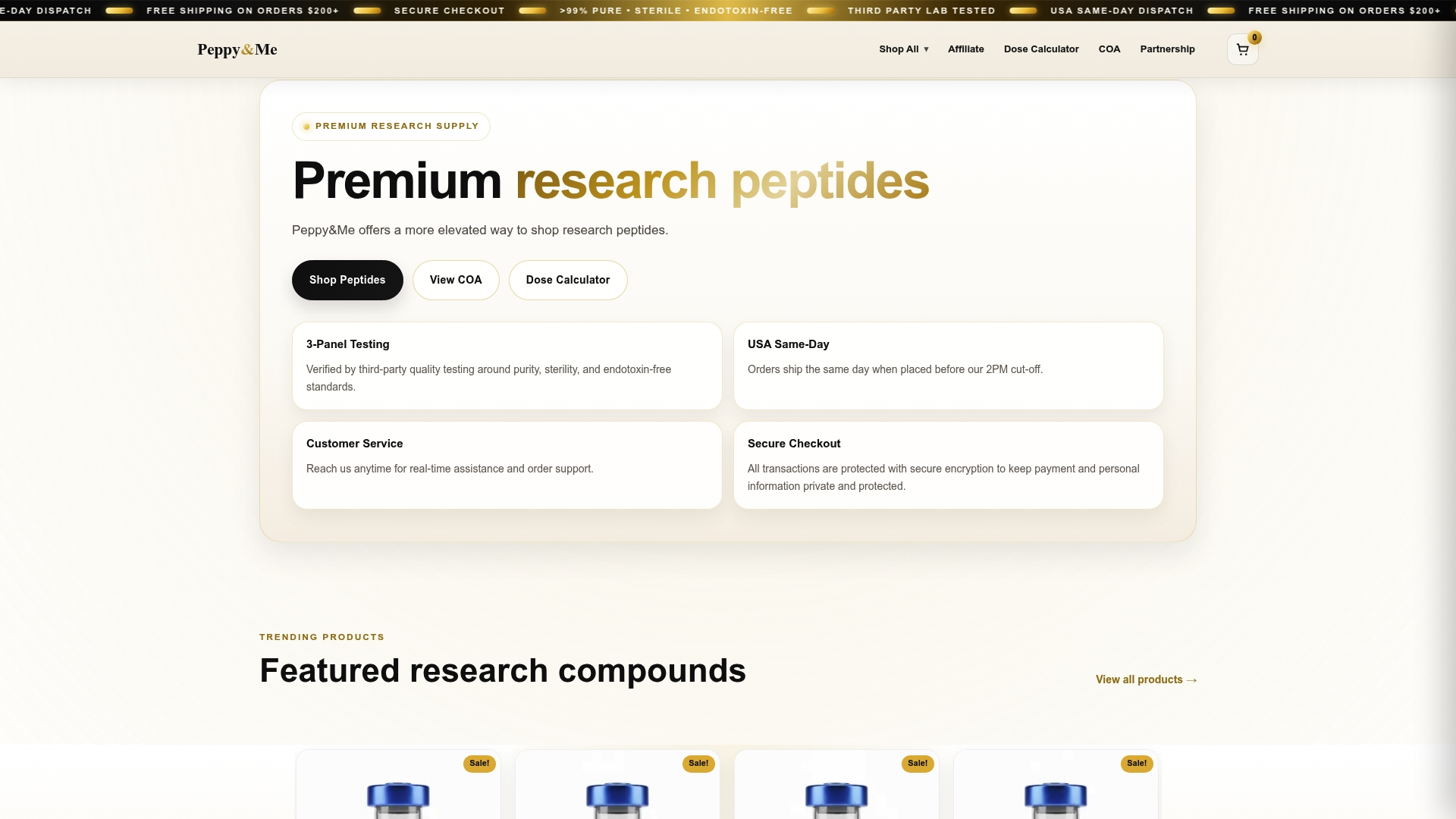
The platform’s built-in peptide dose calculator and comprehensive peptide glossary give researchers the tools to prepare and handle compounds accurately from day one. For those ready to source with confidence, Peppyandme’s research peptide catalog offers a transparent, scalable starting point. You can also explore the sourcing guide for a deeper look at how Peppyandme’s quality standards compare across the research peptide space.
FAQ
What does “research use only” mean for Peppyandme peptides?
Research-use-only (RUO) is a market designation indicating a compound is intended for in-vitro or exploratory scientific study, not human treatment. It is not a regulatory approval or safety certification for human use.
Are any peptides FDA-approved for anti-aging or longevity?
No FDA-approved peptides exist for general anti-aging or longevity purposes as of 2026. FDA approval applies to specific clinical indications and requires extensive clinical trial data and commercial investment.
How long do reconstituted peptides from Peppyandme stay stable?
Peptides reconstituted with bacteriostatic water and stored refrigerated between 2°C and 8°C remain stable for four to six weeks when properly labeled and protected from light.
How do I avoid dosing errors when using Peppyandme peptides?
Use the Peppyandme dose calculator to verify concentration calculations before drawing any dose, and confirm that you are reading U-100 syringe units correctly (each unit equals 0.01 mL, not 1 mL).
What quality documentation does Peppyandme provide with orders?
Every Peppyandme order includes a third-party Certificate of Analysis covering purity, mass accuracy, sterility, endotoxin levels, and heavy metal content, with traceable lot and batch numbers from manufacturer to warehouse.