Peptide Glossary: Key Terms for Health & Fitness
A peptide is defined as a short chain of amino acids linked by peptide bonds, functioning as a signaling molecule, hormone, or therapeutic agent in the human body. These compounds sit at the intersection of biochemistry and applied wellness, driving processes from appetite regulation to skin repair. Insulin, one of the most studied peptides in medicine, and GLP-1 analogues like semaglutide demonstrate just how clinically significant peptide science has become. The Peppyandme peptide glossary exists to give researchers, fitness enthusiasts, and beauty-focused readers a clear, science-grounded reference for the terminology, mechanisms, and applications that define this field.
What does the peptide glossary cover for beginners?
Peptide terminology can feel dense without a structured starting point. The terms below form the foundation of any serious study of peptide biochemistry.
Core structural terms every reader should know:
- Amino acid: The individual building block of peptides. Twenty standard amino acids combine in different sequences to create biologically active compounds.
- Peptide bond: The covalent chemical bond formed between the carboxyl group of one amino acid and the amino group of the next. This bond defines the peptide chain.
- Polypeptide: A chain of more than approximately 50 amino acids. Proteins are technically large polypeptides, which is why peptides and proteins are often discussed together.
- N-terminus and C-terminus: The two ends of every peptide chain. The N-terminus carries a free amino group; the C-terminus carries a free carboxyl group. Researchers use these terms to describe peptide orientation and receptor binding.
- Secondary structure: The local folding pattern of a peptide chain, most commonly an alpha helix or a beta sheet. These shapes directly influence how a peptide interacts with receptors.
- Bioavailability: The fraction of an administered peptide that reaches systemic circulation in active form. Bioavailability determines how a peptide is delivered and at what dose.
- Half-life: The time required for the concentration of a peptide in the body to decrease by half. Short half-lives, common in many research peptides, affect dosing frequency.
Peptide synthesis terminology is equally important for understanding product quality. Solid-phase peptide synthesis (SPPS) is a Nobel Prize-winning laboratory method that builds peptides one amino acid at a time on a solid resin bead. This method underpins the production of virtually every synthetic research peptide available today.
| Term | Definition | Relevance |
|---|---|---|
| Amino acid | Single building block of peptides | Determines peptide sequence and function |
| Peptide bond | Covalent link between amino acids | Defines chain structure |
| Half-life | Time for 50% concentration reduction | Guides dosing intervals |
| Bioavailability | Active fraction reaching circulation | Determines delivery method |
| SPPS | Lab synthesis method for peptides | Ensures consistent purity in research compounds |
How do peptides function inside the body?
Peptides function as biological messengers. They bind to specific cell surface receptors and trigger downstream signaling cascades that regulate everything from metabolism to immune response.

The two primary receptor interaction types are agonists and antagonists. An agonist activates a receptor upon binding, producing a biological response. An antagonist blocks a receptor, preventing activation. Semaglutide, a GLP-1 receptor agonist, activates appetite suppression receptors in the brain and gut. This single mechanism accounts for its effectiveness in metabolic research.
Peptides also function as hormones, neurotransmitters, and immune regulators. Insulin regulates blood glucose by binding to insulin receptors on muscle and fat cells. Oxytocin acts as both a hormone and a neurotransmitter, influencing social bonding and uterine contraction. These examples illustrate how the same peptide class can produce radically different physiological effects depending on receptor type and tissue location.
GHK-Cu (copper peptide) demonstrates a different signaling pathway entirely. GHK-Cu modulates skin regeneration through antioxidant activity and tissue repair signaling, making it a widely studied compound in cosmetic science. Its mechanism involves upregulating collagen synthesis and reducing inflammatory markers, which explains its presence in premium skincare formulations.
Pro Tip: When reading peptide research, always identify whether a compound is acting as an agonist or antagonist. That single distinction tells you whether the peptide activates or suppresses a given biological pathway.
Therapeutic vs. research peptides: what is the difference?
Not all peptides carry the same regulatory status, and that distinction matters significantly for safety and application.
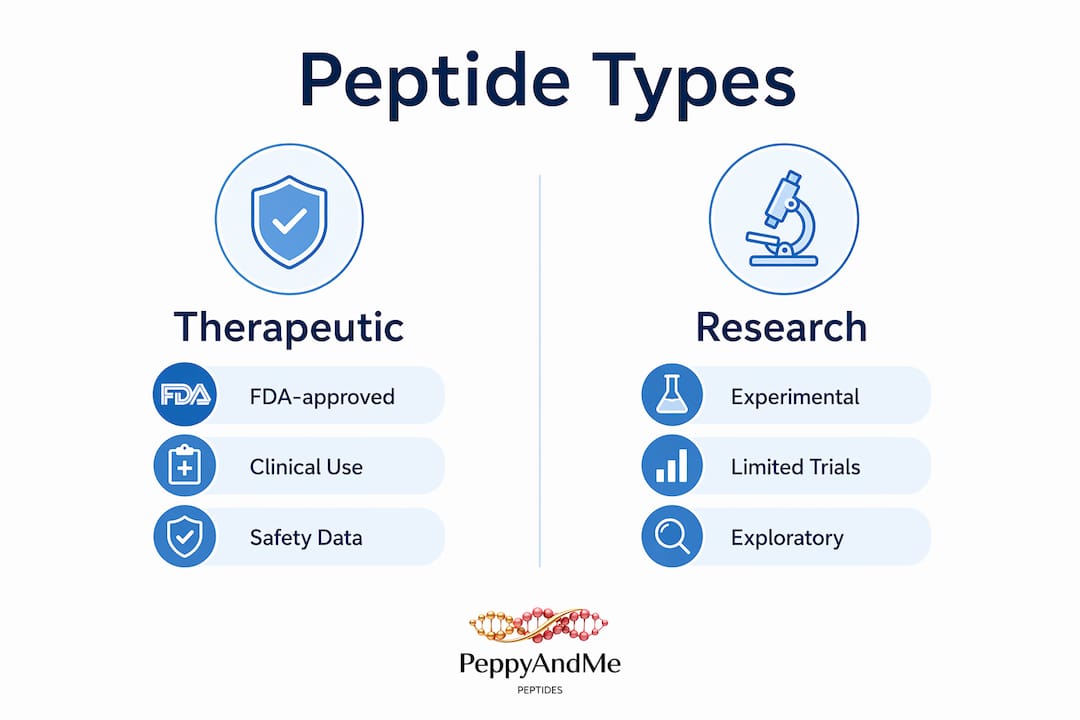
Insulin and semaglutide are FDA-approved therapeutic peptides with extensive clinical safety and efficacy data behind them. They have passed rigorous multi-phase clinical trials, carry defined dosing protocols, and are manufactured under pharmaceutical-grade conditions. These compounds represent the gold standard of peptide medicine.
Research peptides occupy a different category. Many wellness peptides sold online lack rigorous human clinical safety data and are categorized as research chemicals rather than approved drugs. This does not mean they are without scientific interest. It means the evidence base is still developing, and regulatory frameworks have not yet caught up with the pace of research.
Commonly studied research peptides include:
- BPC-157: A synthetic peptide derived from a protein found in gastric juice, studied for tissue repair and gut health applications.
- TB-500: A synthetic fragment of Thymosin Beta-4, researched for its role in wound healing and muscle recovery. Fitness researchers exploring peptides for muscle recovery frequently reference this compound.
- CJC-1295: A growth hormone-releasing hormone analogue studied for its effects on growth hormone secretion and body composition.
- Melanotan II: A synthetic analogue of alpha-melanocyte-stimulating hormone, researched for its effects on pigmentation and libido.
- GHK-Cu: A copper-binding peptide studied extensively in skin biology for collagen stimulation and anti-aging effects.
| Peptide | Category | Primary Research Area |
|---|---|---|
| Insulin | FDA-approved | Blood glucose regulation |
| Semaglutide | FDA-approved | Metabolic and appetite regulation |
| BPC-157 | Research peptide | Tissue repair, gut health |
| TB-500 | Research peptide | Wound healing, muscle recovery |
| GHK-Cu | Research/cosmetic peptide | Skin regeneration, anti-aging |
FDA approval requires massive financial investment and multi-phase clinical trials. Naturally occurring or difficult-to-patent peptides often remain unapproved not because they lack scientific interest, but because the commercial incentive to fund approval pathways is limited. Understanding this distinction is critical for any researcher evaluating a peptide’s regulatory status.
Pro Tip: Always check whether a peptide is FDA-approved or classified as a research chemical before drawing conclusions about its safety profile. The two categories carry fundamentally different evidence standards.
Scientific and regulatory nuances: quality and safety
Understanding peptide quality requires more than reading a product label. Several scientific and regulatory factors determine whether a research peptide is suitable for laboratory use.
Delivery method matters. Oral bioavailability of peptides is often very low due to degradation by digestive enzymes. Subcutaneous injection provides significantly better systemic availability for most research peptides. This is why most peptide research protocols specify injectable administration.
Dosing is not standardized. No universally accepted safe or effective dosage exists for many research peptides because standardized clinical trials have not been completed. Dosing protocols circulating online are largely anecdotal and carry unknown health risks.
Purity directly affects outcomes. Impure peptides can introduce endotoxins, heavy metals, or microbial contamination into a research environment. Third-party testing for purity, mass accuracy, sterility, and endotoxin levels is the minimum acceptable standard for any credible supplier.
Source verification is non-negotiable. Peptides sourced from unverified suppliers may carry inconsistent concentrations, undisclosed additives, or degraded compounds. Traceable lot and batch numbers from manufacturer to warehouse are the clearest indicator of supply chain transparency.
Regulatory compliance protects researchers. Distinguishing FDA-approved peptides from research-use-only products is critical for assessing risk. Researchers using compounds outside their approved indications carry legal and safety responsibilities that require clear documentation and proper protocols.
“Peptides, although natural signaling molecules, are not inherently safe at any dose when lab-synthesized for non-approved uses.” — MIT Technology Review, 2026
Peppyandme addresses these concerns directly. Every product undergoes third-party testing for purity, mass accuracy, endotoxins, sterility, and heavy metals. Lot and batch numbers are traceable from manufacturer to warehouse, giving researchers full transparency at every stage. Reviewing safe sourcing practices before purchasing any research peptide is a step no serious researcher should skip.
How to read peptide product data and research studies
Reading a peptide Certificate of Analysis (CoA) correctly separates informed researchers from uninformed buyers. A CoA is a document issued by a third-party laboratory that confirms a peptide’s identity, purity, and safety profile.
Key elements to look for in a CoA:
- Purity percentage: Expressed as a percentage by high-performance liquid chromatography (HPLC). A purity of 98% or above is the standard for research-grade compounds.
- Mass accuracy: Confirmed by mass spectrometry. This verifies the peptide’s molecular weight matches its theoretical structure.
- Endotoxin levels: Measured in endotoxin units per milligram (EU/mg). High endotoxin content indicates bacterial contamination.
- Sterility testing: Confirms the absence of microbial growth in injectable peptide preparations.
- Heavy metal analysis: Screens for lead, arsenic, mercury, and cadmium, which can accumulate from synthesis reagents.
Pharmacokinetic terms also appear frequently in research data. EC50 refers to the concentration of a compound that produces 50% of its maximum possible effect. A lower EC50 indicates higher potency. Half-life, as defined earlier, determines how frequently a peptide must be administered to maintain consistent research conditions.
Peppyandme’s built-in dose calculator removes much of the guesswork from measurement. For researchers working with lyophilized (freeze-dried) peptides, accurate reconstitution and dosing calculations are critical for reproducible results. Consulting a qualified healthcare provider before any human-adjacent research protocol remains the standard recommendation.
Pro Tip: Request the CoA for every peptide you source. If a supplier cannot provide one from an accredited third-party laboratory, that alone is sufficient reason to look elsewhere.
Key takeaways
Peptide research requires both scientific literacy and rigorous quality standards, and the most reliable starting point is a clear, verified peptide glossary paired with third-party-tested compounds.
| Point | Details |
|---|---|
| Peptide definitions matter | Knowing terms like half-life, bioavailability, and agonist directly affects how you interpret research data. |
| FDA status is not optional knowledge | Distinguishing approved peptides from research chemicals is the first step in any responsible evaluation. |
| Delivery method affects results | Subcutaneous injection is the preferred route for most research peptides due to low oral bioavailability. |
| CoA verification is mandatory | Always confirm purity, mass accuracy, sterility, and endotoxin levels before using any research peptide. |
| Dosing lacks standardization | No universal dosing protocol exists for most research peptides; anecdotal protocols carry real risk. |
Peppyandme’s take on the peptide hype cycle
The peptide wellness space in 2026 is generating significant public interest, and that attention is not entirely misplaced. The science behind compounds like GHK-Cu, BPC-157, and GLP-1 analogues is genuinely compelling. The problem is that enthusiasm consistently outpaces evidence, and that gap creates real risk for uninformed users.
What concerns us most is not the research itself. It is the normalization of self-administration without proper sourcing, testing, or medical oversight. Peptides are not supplements. They are biologically active compounds that interact with specific receptors and trigger measurable physiological responses. Treating them casually because they are “natural” misunderstands what natural actually means at the molecular level.
The most responsible approach is also the most straightforward: source from verified suppliers, read the CoA, understand the regulatory status of what you are working with, and consult a qualified professional before any human-adjacent protocol. The Peppyandme peptide glossary and dose calculator exist precisely to support that kind of informed, methodical research. Education is not a bonus feature. It is the foundation of safe practice.
The future of peptide science is genuinely exciting. Ongoing research into tissue repair, metabolic regulation, and skin biology continues to produce findings worth following. Getting there responsibly requires the same rigor that any serious scientific inquiry demands.
— Peppyandme
Explore research peptides with Peppyandme
Peppyandme provides authorized researchers and health professionals with access to premium, third-party-tested research peptides, backed by full transparency from synthesis to delivery.
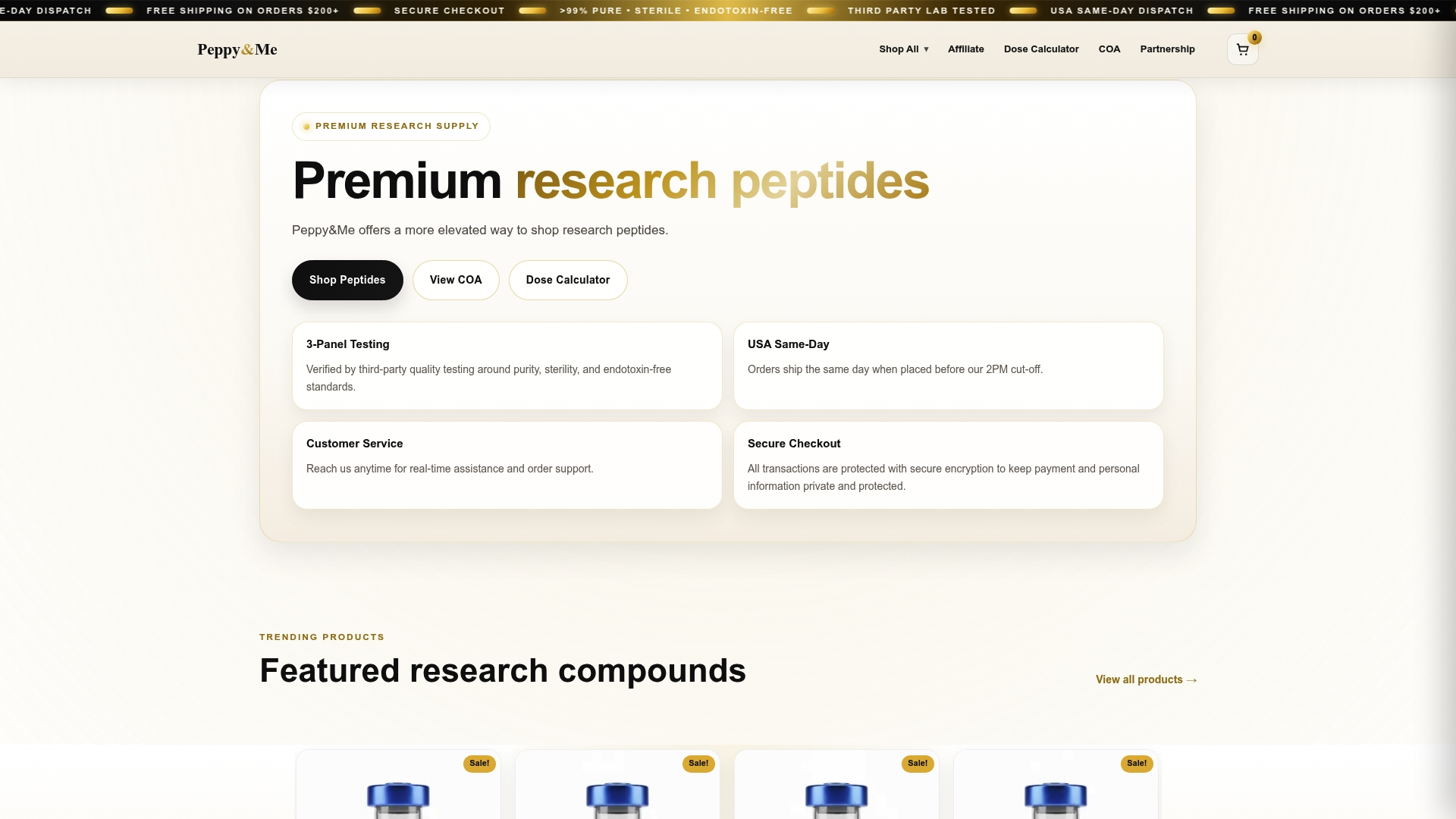
Every product in the Peppyandme catalog is tested for purity, sterility, endotoxin content, mass accuracy, and heavy metals. Orders placed before 2 PM ship the same day. The platform also includes a built-in dose calculator and a comprehensive peptide reference resource covering protocols, handling, and research data for each compound. For researchers who want verified quality without compromise, Peppyandme’s research peptide catalog is the place to start.
FAQ
What is a peptide in simple terms?
A peptide is a short chain of amino acids linked by peptide bonds. Peptides act as signaling molecules in the body, regulating processes like hormone release, immune response, and tissue repair.
What is the difference between a peptide and a protein?
Peptides are generally chains of fewer than 50 amino acids, while proteins are longer polypeptide chains. The distinction is structural, though both are built from the same amino acid building blocks.
Are research peptides the same as fda-approved peptides?
No. FDA-approved peptides like insulin and semaglutide have completed rigorous clinical trials with verified safety and efficacy data. Research peptides are categorized as research chemicals and lack that level of regulatory validation.
Why is subcutaneous injection preferred for most peptides?
Oral bioavailability of peptides is often very low because digestive enzymes break them down before they reach systemic circulation. Subcutaneous injection bypasses this degradation and delivers the compound more reliably.
What should a peptide certificate of analysis include?
A valid CoA should confirm purity by HPLC, molecular weight by mass spectrometry, endotoxin levels, sterility, and heavy metal screening. Any research peptide supplier that cannot provide this documentation from an accredited third-party lab should not be used.