Peptides for Muscle Recovery: What Athletes Need to Know

Peptides for muscle recovery are short-chain amino acid sequences that signal the body to repair damaged tissue, reduce inflammation, and restore muscle function after intense training or injury. Compounds like BPC-157, TB-500, and the newer Myoki have drawn serious attention from athletes and sports medicine researchers alike. The science is advancing, but the gap between marketing claims and clinical evidence is often larger than most athletes realize. This article breaks down what the research actually shows, which peptides carry the most evidence, and what you need to know before using any of them.
1. What are the top peptides investigated for muscle recovery?
Muscle recovery peptides fall into three distinct categories: protein-derived nutritional peptides, investigational therapeutic peptides, and research-stage compounded peptides with limited clinical validation. Understanding which category a peptide belongs to determines how much weight you should give the evidence supporting it.
Myoki is currently the most clinically advanced investigational peptide for muscle repair. It works by binding myostatin, a protein that limits muscle growth, while also modulating protein degradation pathways. In vitro, animal, and human data all show that Myoki promotes muscle protein synthesis and partly restores contractile protein composition in aged muscle tissue. That combination of multi-model evidence makes it stand out from most other recovery peptides.

BPC-157 (Body Protection Compound 157) is a synthetic pentadecapeptide derived from a protein found in gastric juice. Animal studies report effects on angiogenesis (new blood vessel formation) and connective tissue repair, which explains its popularity among athletes seeking a peptide for injury recovery or joint pain recovery. Human trial data, however, remains sparse.
TB-500 is a synthetic version of thymosin beta-4, a naturally occurring protein involved in cell migration, tissue regeneration, and vascularization. It has shown promise in animal models for accelerating wound healing and reducing inflammation, but like BPC-157, large-scale human trials are absent.
- Myoki: Myostatin inhibition, protein synthesis promotion, supported by randomized controlled trial data
- BPC-157: Angiogenesis, connective tissue repair, strong animal data, limited human evidence
- TB-500: Cell migration, vascularization, anti-inflammatory effects, primarily preclinical data
- Whey peptides / collagen peptides: Protein-derived, nutritionally validated, widely available and regulated
Pro Tip: When evaluating any recovery peptide, ask which category it belongs to. A peptide with only animal data is not equivalent to one with randomized controlled trial results in humans. Treat them as separate tiers of evidence.
2. How strong is the scientific evidence for these peptides?
The honest answer is that the evidence base is uneven, and muscle recovery peptides should be evaluated using randomized controlled human trials rather than animal or cell models alone. That standard immediately separates Myoki from the rest of the field.
Myoki completed a randomized placebo-controlled trial in 80 patients with muscle atrophy, using 200 mg per day for 12 weeks. The trial showed significant improvements in muscle mass, handgrip strength, and walking speed, alongside a favorable safety profile. That is the kind of rigorous data that most investigational peptides simply do not yet have.
For BPC-157, clinical evidence in human sports injury recovery is extremely limited. The largest human study on knee pain involved only 16 participants with no control group. That is observational data, not proof of efficacy. A Phase 2 randomized trial is now testing BPC-157 in acute hamstring strain with MRI endpoints and return-to-play assessment, which will provide far more reliable answers.
| Peptide | Evidence level | Human trial status | Regulatory standing |
|---|---|---|---|
| Myoki | High (RCT completed) | Phase 2 completed, positive outcomes | Investigational, not FDA-approved |
| BPC-157 | Low (animal + small observational) | Phase 2 ongoing (hamstring strain) | Not FDA-approved, WADA banned (S0) |
| TB-500 | Low (animal models) | No registered human trials | Not FDA-approved, WADA banned (S2.3) |
| Whey peptides | Moderate (multiple RCTs) | Multiple completed trials | Generally recognized as safe (GRAS) |
FDA approval requires substantial financial investment, large-scale clinical trials, and commercial backing. Many naturally occurring or difficult-to-patent peptides receive limited funding despite genuine biological interest, which explains why promising compounds like BPC-157 remain unapproved despite years of research.
3. Anti-doping rules and safety considerations every athlete must know
For competitive athletes, anti-doping compliance is a more immediate concern than general legality. BPC-157 is banned under WADA’s S0 category (non-approved substances) since 2022, and TB-500 has been prohibited under S2.3 (Growth Factors) since 2018. Neither carries a Therapeutic Use Exemption pathway, meaning there is no approved medical justification that permits their use in competition.
The detection risk is real and measurable. Modern LC-HRMS testing methods can identify BPC-157 and TB-500 metabolites at concentrations as low as 0.01 ng/mL, with detection windows of approximately four to five days. Athletes who believe they can time usage around testing windows are taking a significant and poorly calculated risk.
Beyond doping rules, safety concerns center on product purity and the absence of standardized dosing protocols. Anecdotal reports of side effects exist, but without large human trials, the full adverse event profile of investigational peptides remains unknown. Sourcing from unverified suppliers adds contamination risk on top of that uncertainty.
Compliance checklist for competitive athletes:
- Verify every peptide against the current WADA Prohibited List before use
- Confirm that no Therapeutic Use Exemption applies to the compound in question
- Source only from suppliers with third-party testing for purity, sterility, endotoxins, and heavy metals
- Consult a sports medicine physician or certified anti-doping advisor before starting any peptide protocol
- Document all supplements and peptides used for your own records
Pro Tip: Product purity matters as much as the peptide itself. A contaminated or mislabeled product can trigger a positive test even if the intended compound is not on the prohibited list. Peppyandme provides traceable lot and batch numbers with full third-party testing documentation, which is the minimum standard you should accept from any supplier.
4. How peptide supplements compare to other muscle recovery aids
Not all recovery peptides are investigational compounds. Protein-derived peptide supplements, including whey peptides and collagen peptides, occupy a separate and better-regulated category. These products deliver measurable amino acid content and have been tested in multiple clinical settings.
A clinical trial comparing whey protein to a reduced-protein drink with a peptide supplement showed benefits in physical function tests and quality of life, particularly in older adults. The practical implication for athletes is that protein-derived peptides support recovery through established nutritional pathways, not experimental signaling mechanisms. They are not as targeted as investigational peptides, but the safety and regulatory profile is far cleaner.
| Category | Efficacy evidence | Regulatory status | Safety profile |
|---|---|---|---|
| Investigational peptides (BPC-157, TB-500) | Promising animal data, limited human trials | Not FDA-approved, WADA banned | Unknown long-term safety |
| Myoki | RCT-supported in muscle atrophy | Investigational, not FDA-approved | Favorable in 12-week trial |
| Whey / collagen peptides | Multiple RCTs, consistent results | GRAS, widely regulated | Well-established |
| Non-peptide recovery (sleep, nutrition) | Strong evidence base | N/A | No risk |
Sports medicine experts consistently recommend adequate sleep, balanced macronutrient intake, and progressive training load management as the foundation of any recovery program. Peptides, whether investigational or nutritional, work best as additions to that foundation rather than replacements for it. Herbal recovery options, including recovery-focused herbal teas, can also complement a structured recovery plan for athletes seeking non-pharmaceutical support.
Pro Tip: If you are not yet optimizing sleep, protein intake, and training periodization, adding investigational peptides is unlikely to produce meaningful results. Address the fundamentals first, then evaluate whether peptides offer incremental benefit for your specific goals.
5. How to responsibly integrate peptides into your recovery plan
Responsible use of recovery peptides starts with interpreting the research accurately. The rapid growth of online peptide vendors has outpaced peer-reviewed clinical evidence, which means a product being widely sold does not indicate it is well-studied. You need to evaluate the evidence tier, the regulatory status, and the sourcing quality independently.
Consulting a healthcare professional before starting any peptide protocol is not optional caution. It is the only way to account for individual health factors, potential drug interactions, and appropriate dosing. A sports medicine physician familiar with anti-doping regulations can also help you assess whether a specific peptide creates compliance risk for your competitive category.
Sourcing quality is a non-negotiable variable. Third-party testing for purity, sterility, endotoxin levels, and heavy metals is the minimum standard. Peppyandme provides full transparency on this front, with traceable lot and batch numbers from manufacturer to warehouse, a built-in dose calculator, and a comprehensive peptide glossary covering protocols and handling guidance.
Best practices for safe peptide use:
- Confirm the peptide’s WADA status before use if you compete in any tested sport
- Use only products with documented third-party testing and traceable batch numbers
- Start with the lowest studied dose and monitor for any adverse responses
- Combine peptide use with proven recovery methods: sleep, nutrition, and structured rest
- Keep records of all products used, including lot numbers and dosing dates
- Reassess regularly based on how your body responds and any new research published
Key takeaways
The most effective approach to peptides for muscle recovery combines rigorous evidence evaluation, anti-doping compliance, and sourcing from verified, third-party tested suppliers.
| Point | Details |
|---|---|
| Evidence varies widely | Myoki has RCT support; BPC-157 and TB-500 rely primarily on animal data and small observational studies. |
| WADA bans apply | BPC-157 (S0) and TB-500 (S2.3) are prohibited at all times with no Therapeutic Use Exemption available. |
| Protein-derived peptides are safer | Whey and collagen peptides offer regulated, well-studied recovery support with established safety profiles. |
| Sourcing quality is critical | Third-party testing for purity, sterility, endotoxins, and heavy metals is the minimum acceptable standard. |
| Fundamentals come first | Sleep, nutrition, and training structure remain the most evidence-backed recovery tools available. |
Peppyandme’s perspective on peptides and athlete recovery
The peptide space in 2026 is genuinely exciting, and it is also genuinely overhyped in equal measure. At Peppyandme, we work closely with the research literature, and what strikes us most is how often athletes encounter confident marketing claims built on a foundation of rodent studies and anecdotal reports. That is not a reason to dismiss peptides entirely. Myoki’s randomized controlled trial data is legitimately compelling, and the ongoing Phase 2 BPC-157 hamstring trial will produce the kind of imaging-backed, return-to-play data the field has needed for years.
What concerns us more is the sourcing environment. The volume of unverified peptide products available online creates real risk, not just from contamination, but from mislabeled concentrations that make any dosing protocol unreliable. We built our testing and traceability standards around that specific problem. Athletes deserve to know exactly what is in the product they are using, at what concentration, and with what purity verification.
The anti-doping dimension is where we see the most dangerous knowledge gaps. Athletes who use BPC-157 or TB-500 without understanding their WADA status are not making an informed risk decision. They are making an uninformed one. The detection sensitivity at 0.01 ng/mL means the margin for error is essentially zero. Our position is straightforward: if you compete in a tested sport, the regulatory risk of these compounds currently outweighs the unproven performance benefit. If you are a non-competitive researcher or fitness enthusiast, the conversation is different, but sourcing quality and medical oversight still matter.
— Peppy&Me
Explore research peptides at Peppyandme
Athletes and fitness enthusiasts who want access to lab-verified research peptides need a supplier that matches their standards for quality and transparency. Peppyandme provides third-party tested peptides with documented purity, sterility, endotoxin, and heavy metal analysis, along with traceable batch numbers from manufacturer to warehouse.
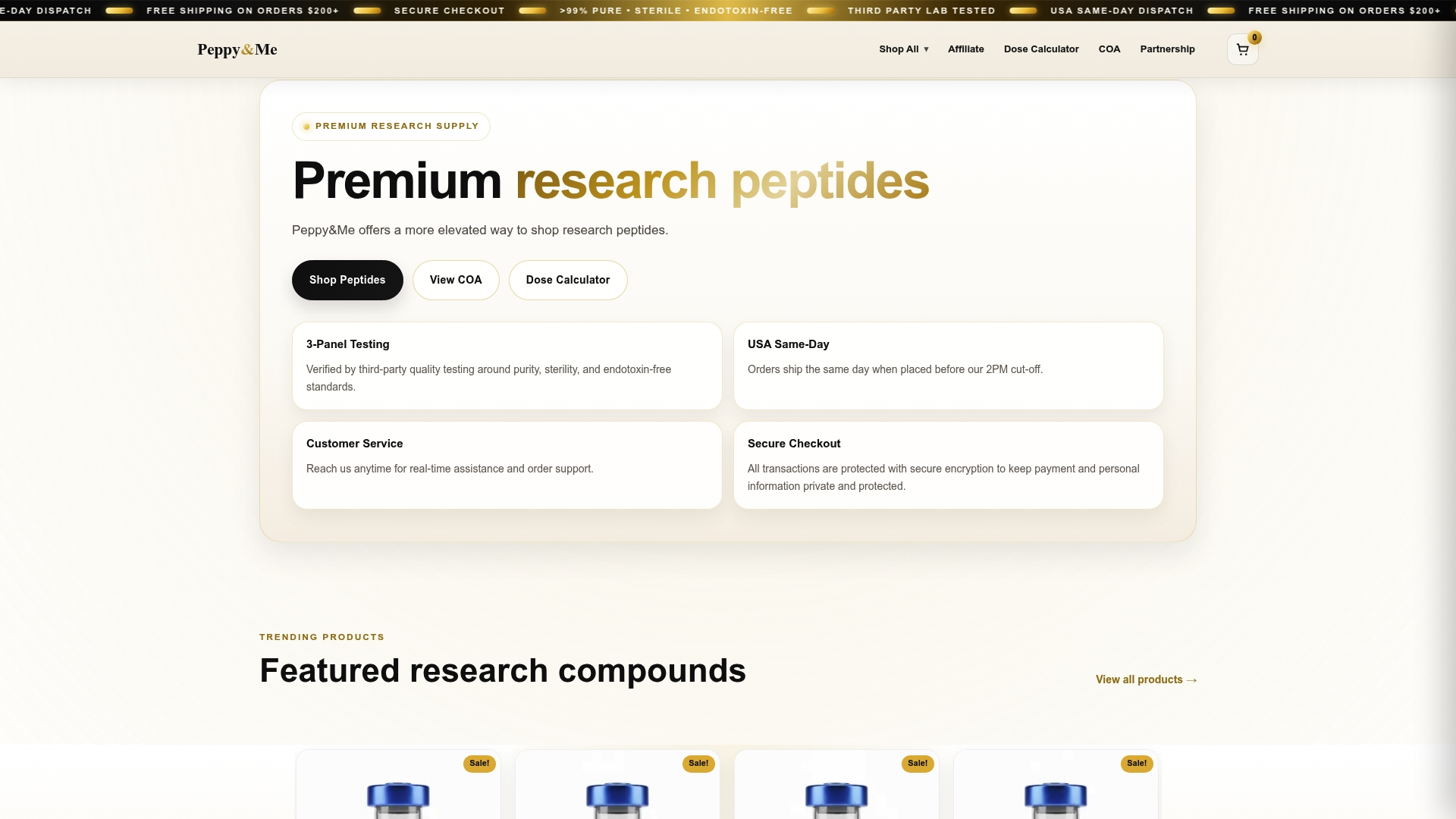
Orders placed before 2 PM ship the same day, and the platform includes a built-in dose calculator and a full peptide glossary for research guidance. Whether you are evaluating options for the first time or looking to upgrade your current supplier, the peptide sourcing guide at Peppyandme is a practical starting point. For a broader overview of available compounds, the research peptides catalog covers the full range of products with supporting research context.
FAQ
What peptides are most studied for muscle recovery?
Myoki currently has the strongest human trial evidence, having completed a randomized placebo-controlled trial showing improvements in muscle mass and strength. BPC-157 and TB-500 show promise in animal models but lack large-scale human trial data.
Are BPC-157 and TB-500 legal for competitive athletes?
No. Both are prohibited under WADA rules at all times, with no Therapeutic Use Exemption available. BPC-157 is banned under category S0 since 2022, and TB-500 under S2.3 since 2018.
How do I know if a peptide product is safe to use?
Look for third-party testing documentation covering purity, sterility, endotoxins, and heavy metals, along with traceable lot and batch numbers. Sourcing from a verified supplier like Peppyandme reduces contamination and mislabeling risk significantly.
What is the difference between investigational peptides and protein-derived peptides?
Investigational peptides like BPC-157 are synthetic compounds tested for therapeutic effects, with limited human data. Protein-derived peptides like whey or collagen peptides are nutritional products with established safety profiles and multiple completed clinical trials.
Should I consult a doctor before using recovery peptides?
Yes. A sports medicine physician can assess individual health factors, potential interactions, anti-doping compliance for your specific sport, and appropriate dosing based on current research, which no supplement label or online resource can replace.