Bacteriostatic water: Essential guide for peptide research
TL;DR:
- Bacteriostatic water contains benzyl alcohol, which inhibits bacterial growth but does not sterilize, making it suitable for multi-dose use. It differs from sterile water, which is preservative-free and intended for single use, impacting contamination risk and protocol choice. Proper understanding of these differences ensures research accuracy, safety, and protocol compliance.
Researchers working with injectable compounds often assume that any water labeled “sterile” is interchangeable across laboratory applications. That assumption creates real problems. Bacteriostatic water for injection, USP contains benzyl alcohol and functions as a diluent for injectable drugs, meaning its preservative chemistry is what separates it from plain sterile water. Understanding that distinction is not a minor technical detail. It directly affects vial usability, protocol compliance, and the integrity of your research data. This article covers the mechanism behind bacteriostatic water, how it compares to sterile water, its practical role in peptide reconstitution, and the exceptions that every lab team needs to know.
Table of Contents
- What is bacteriostatic water? Definition and core mechanism
- Bacteriostatic water vs sterile water: Key differences for research protocols
- Practical applications: Bacteriostatic water in peptide research and laboratory workflows
- Expert nuances: Potential drawbacks, contraindications, and protocol exceptions
- Why most lab teams misjudge their water choice—and how to get it right
- Where to source bacteriostatic water and compatible peptides for your lab applications
- Frequently asked questions
Key Takeaways
| Point | Details |
|---|---|
| Preservative enables multi-dose | Bacteriostatic water contains benzyl alcohol, allowing safe access over multiple days. |
| Choose water by protocol | Research applications dictate whether bacteriostatic or sterile water is appropriate. |
| Reconstitution best practices | Follow aseptic technique and recommended storage periods to ensure safety. |
| Beware of contraindications | Preservatives are unsuitable for neonates and sensitive protocols requiring pure diluents. |
| Reliable sourcing matters | Trusted suppliers provide compliant bacteriostatic water and peptides for laboratory needs. |
What is bacteriostatic water? Definition and core mechanism
Bacteriostatic water for injection is a pharmaceutical-grade aqueous solution containing 0.9% benzyl alcohol as a preservative. The term “bacteriostatic” refers specifically to the preservative’s ability to inhibit bacterial growth rather than kill bacteria outright. That distinction matters in laboratory and clinical settings because the goal is not sterilization but rather the suppression of microbial proliferation between uses.
Bacteriostatic water uses benzyl alcohol to inhibit bacterial growth, which is precisely why it is classified differently from sterile water under USP (United States Pharmacopeia) labeling. USP labeling provides standardized quality benchmarks, and bacteriostatic water must meet those benchmarks before it can be used as a pharmaceutical diluent.
The core chemistry works like this: benzyl alcohol disrupts bacterial cell membranes and interferes with metabolic processes, preventing bacteria from multiplying. It does not eliminate all organisms already present, but it creates an environment hostile to growth. This is why aseptic technique remains essential even when using bacteriostatic water. The preservative buys you time and reduces contamination risk, but it does not replace proper handling.
Key terminology for research professionals:
- Bacteriostatic: Inhibits microbial growth without necessarily killing organisms
- Bactericidal: Actively kills bacteria (not what benzyl alcohol does here)
- USP: United States Pharmacopeia, the regulatory standard governing pharmaceutical quality
- BAC water: Common shorthand for bacteriostatic water used in research settings
- Diluent: A liquid used to dissolve or dilute another substance for injection or reconstitution
The bacteriostatic effect inhibits microbial growth, supporting longer vial usability across multiple withdrawals. This is the practical payoff for researchers: one vial can be accessed repeatedly over a defined period, reducing waste and supporting multi-dose experimental designs.
| Property | Description |
|---|---|
| Active preservative | Benzyl alcohol (0.9%) |
| Mechanism | Inhibits bacterial cell membrane function |
| Classification | Bacteriostatic (not bactericidal) |
| Regulatory standard | USP labeled |
| Primary use | Diluent for injectable drugs and peptides |
| Vial type | Multi-dose |
“The preservative in bacteriostatic water does not sterilize. It suppresses. That distinction defines every protocol decision that follows.”
Understanding this mechanism is not academic. When researchers treat bacteriostatic water as a passive carrier liquid, they underestimate both its utility and its limitations. The preservative is doing active work every time a vial is accessed, and that work has boundaries.
Bacteriostatic water vs sterile water: Key differences for research protocols
The choice between bacteriostatic water and sterile water is not a matter of preference. It is a protocol-driven decision with direct consequences for research validity, compliance, and safety. Most confusion in laboratory settings stems from treating these two products as interchangeable, when in fact their regulatory classifications and intended uses are fundamentally different.
Sterile Water for Injection contains no bacteriostat and is supplied only in single-dose containers. Once opened, a vial of sterile water has no mechanism to prevent microbial contamination. Any unused portion must be discarded. This is not a conservative recommendation. It is a pharmacological reality tied to the absence of a preservative.
Bacteriostatic water, by contrast, is specifically formulated for multi-dose use. The benzyl alcohol preservative creates a window of usability that sterile water simply cannot offer. The choice is fundamentally about preservative presence and intended use pattern, and getting that choice wrong introduces contamination risk or unnecessary waste into your workflow.
Comparison table: Bacteriostatic water vs sterile water
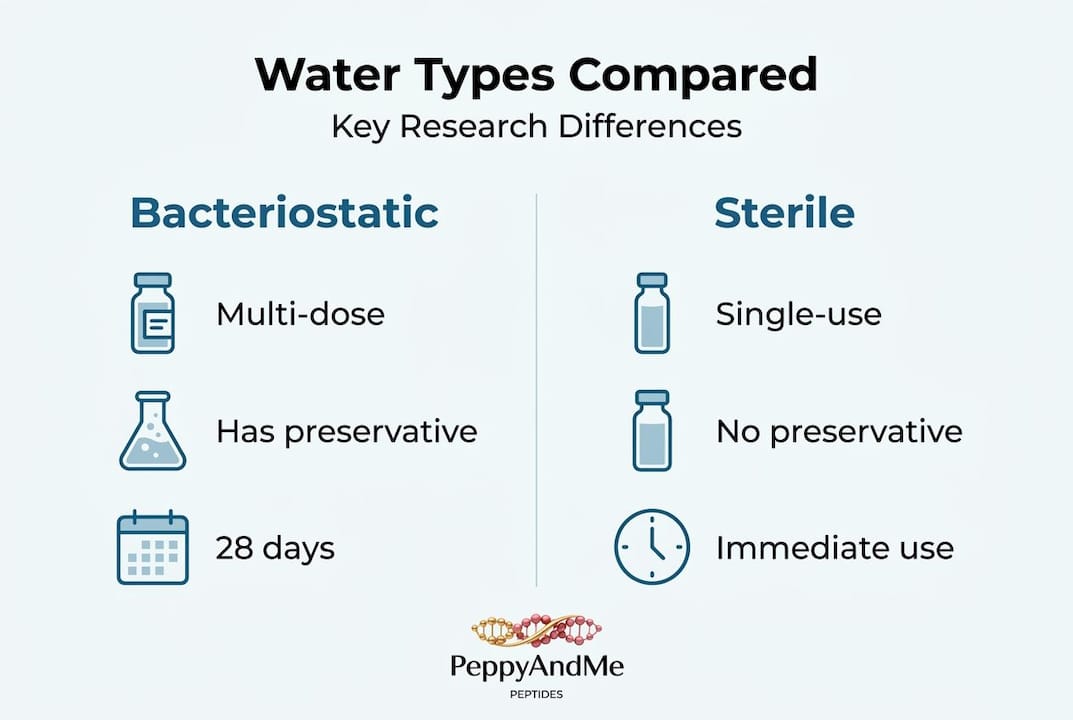
| Feature | Bacteriostatic water | Sterile water for injection |
|---|---|---|
| Preservative | 0.9% benzyl alcohol | None |
| Container type | Multi-dose vial | Single-dose only |
| Post-opening usability | Up to ~28 days (proper handling) | Discard after single use |
| Regulatory classification | USP multi-dose diluent | USP single-dose diluent |
| Peptide reconstitution | Preferred for multi-day protocols | Suitable for immediate single use |
| Contamination risk over time | Lower (due to preservative) | Higher (no protection after opening) |
| Benzyl alcohol content | Present | Absent |
| Suitable for neonates | No | Potentially, depending on protocol |
When to choose bacteriostatic water:
- Your protocol requires multiple withdrawals from the same vial over days or weeks.
- You are reconstituting a peptide that will be used across several research sessions.
- Your experimental design involves repeated dosing in an animal model over an extended period.
- You need to minimize vial waste while maintaining a consistent solution concentration.
- Your storage conditions allow for refrigerated, aseptic vial management between uses.
When to choose sterile water:
- Your protocol involves a single, immediate use of the reconstituted compound.
- The compound being reconstituted is sensitive to benzyl alcohol or other preservatives.
- Your research population or model is sensitive to preservative exposure.
- Regulatory or institutional protocol explicitly requires preservative-free diluents.
- You are preparing a solution for a one-time assay or in vitro application where preservative chemistry could interfere with results.
A useful way to frame this: sterile water is a clean slate for single-use applications, while bacteriostatic water is a managed environment for multi-dose workflows. Neither is universally superior. Each serves a distinct purpose, and the protocol determines which is appropriate.
One statistic worth noting: in research settings where peptide vials are accessed more than once per week, using sterile water instead of bacteriostatic water effectively increases consumable costs and contamination exposure with each additional opening. The preservative in bacteriostatic water is not a luxury. It is a functional component of multi-dose protocol design.
Practical applications: Bacteriostatic water in peptide research and laboratory workflows
Peptide reconstitution is one of the most common applications for bacteriostatic water in research settings. Lyophilized (freeze-dried) peptides must be dissolved in a suitable solvent before use, and bacteriostatic water is intended as a diluent and reconstitution solvent for peptides and injectable products. Its preservative content makes it the practical choice whenever a peptide vial will be accessed more than once.
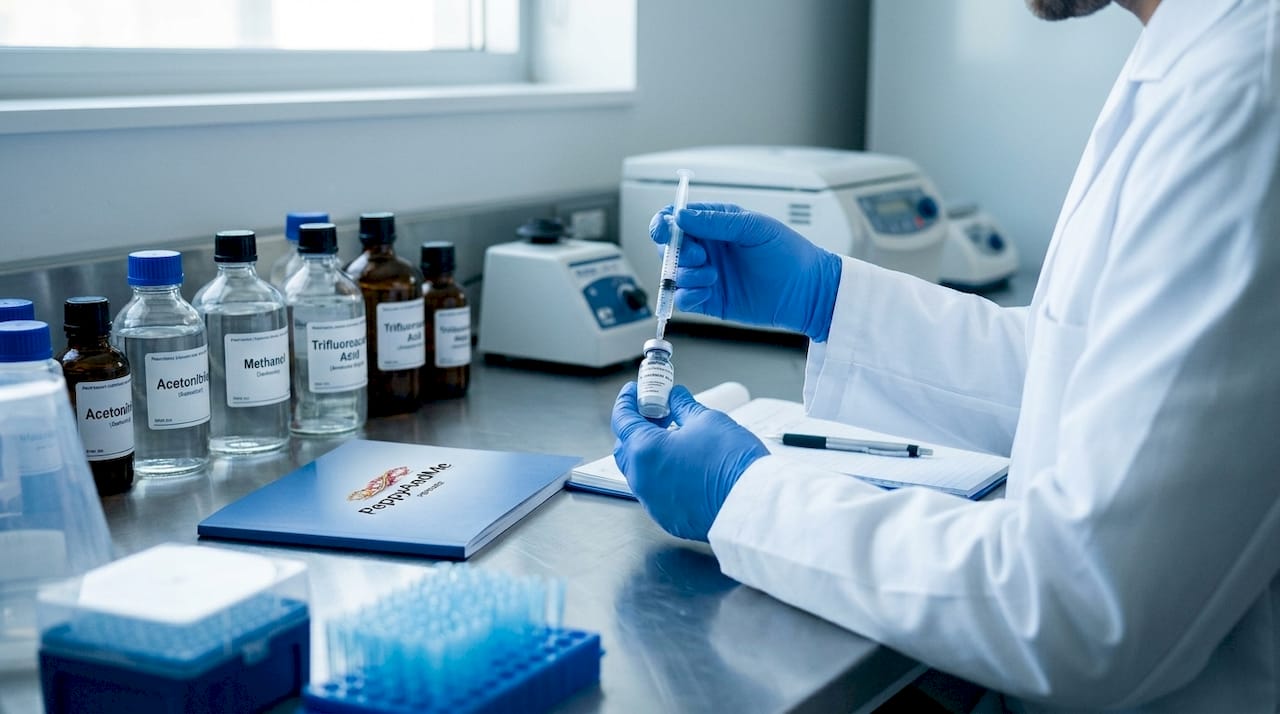
The standard reconstitution process involves adding bacteriostatic water slowly to the lyophilized peptide, allowing the peptide to dissolve without agitation. Vigorous shaking or vortexing can degrade peptide structure, particularly for compounds with complex secondary structures. Gentle swirling or slow inversion is the accepted technique. Once reconstituted, the vial should be stored at the temperature specified by the peptide’s stability profile, typically 2 to 8 degrees Celsius for short-term storage.
Multiple withdrawals from a single vial are supported for up to 28 days with proper handling. That 28-day window is not arbitrary. It reflects the preservative capacity of benzyl alcohol under standard storage and handling conditions. Beyond that window, even with intact aseptic technique, the preservative’s effectiveness cannot be guaranteed.
Best practices for bacteriostatic water use in peptide research:
- Always use a new, sterile needle for each vial access to prevent introducing contaminants
- Wipe the vial septum with 70% isopropyl alcohol before each withdrawal
- Avoid touching the needle tip or the interior of the vial cap
- Label each vial with the reconstitution date and discard date (28 days from opening)
- Store reconstituted peptides upright in a dedicated refrigerated space, away from light
- Use the minimum effective volume of bacteriostatic water to maintain peptide concentration accuracy
- Document each withdrawal, including volume removed and date, to track vial usage
Researchers working with compounds like 5-Amino-1MQ or sermorelin will find that proper reconstitution with bacteriostatic water is a foundational step in producing reliable, reproducible results. These compounds require careful handling, and the diluent choice directly affects solution stability and experimental consistency.
Pro Tip: When calculating your reconstitution volume, work backward from your target concentration. If you need a 1 mg/mL solution from a 5 mg peptide vial, you will add exactly 5 mL of bacteriostatic water. Using a dose calculator, like the one available on the Peppy&Me platform, eliminates arithmetic errors that can compromise dosing accuracy across a multi-week protocol.
Real-world workflow pitfalls are worth addressing directly. One common error is using bacteriostatic water that has been stored at room temperature for extended periods. Even with the preservative present, temperature fluctuations degrade both the water quality and any reconstituted peptide. Another frequent mistake is failing to account for the volume displaced by the peptide itself, which can slightly alter final concentration calculations. For peptide research foundations, these details are not minor. They affect the reliability of every data point generated from that vial.
Researchers interested in expanding their understanding of reconstitution protocols, storage conditions, and compound-specific handling requirements can explore the research peptides blog for detailed, protocol-level guidance across a wide range of compounds.
Expert nuances: Potential drawbacks, contraindications, and protocol exceptions
Bacteriostatic water is not universally appropriate. Its preservative content, which is its primary advantage in multi-dose settings, is also the source of its most significant limitations. Understanding those limitations is not optional for researchers who need to maintain protocol integrity and safety compliance.
The most well-documented contraindication involves neonates. Benzyl alcohol may be contraindicated in neonates or where preservatives interfere with the research or clinical context. In neonates, benzyl alcohol has been associated with a serious condition known as gasping syndrome, characterized by metabolic acidosis, central nervous system depression, and cardiovascular collapse. While this risk is specific to clinical populations, researchers working with neonatal animal models or pediatric cell lines should be aware of this limitation and select preservative-free alternatives.
Situations where bacteriostatic water is not appropriate:
- Neonatal subjects or neonatal animal models where benzyl alcohol toxicity is a concern
- Protocols involving compounds that are chemically incompatible with benzyl alcohol
- In vitro assays where preservative chemistry could interfere with enzyme activity, receptor binding, or cellular response
- Single-dose applications where the preservative provides no benefit and only introduces unnecessary variables
- Research designs requiring preservative-free conditions as a controlled experimental parameter
- Any protocol where institutional review board (IRB) or regulatory guidelines explicitly prohibit preservative-containing diluents
Beyond contraindications, there are subtler protocol-driven exceptions. Some peptides are sensitive to the pH or ionic environment created by benzyl alcohol at certain concentrations. Researchers working with highly sensitive bioassays may find that even trace preservative levels introduce measurable interference. In those cases, sterile, preservative-free water is the correct choice, even if the protocol involves multiple accesses.
Pro Tip: Before finalizing your diluent choice, review the technical data sheet for your specific peptide compound. Manufacturers often specify compatible diluents, and deviating from those recommendations can void quality guarantees and compromise data validity. If no specification is provided, consult your institution’s pharmacy or research compliance team.
Safe handling of bacteriostatic water also requires attention to the physical condition of the vial itself. Inspect each vial for particulate matter, cloudiness, or discoloration before use. Any vial that does not present as a clear, colorless solution should be discarded. Do not use bacteriostatic water beyond its labeled expiration date, regardless of how the vial appears.
For researchers navigating compliance requirements around data security and research material access, the secure access setup guide provides practical guidance on managing research materials within a compliant, protected framework. Proper documentation of diluent use is part of that broader compliance picture.
For a broader review of how preservative choices intersect with safety in peptide-based research, peptide therapy evidence offers evidence-based context on safe use practices across multiple compound categories.
Why most lab teams misjudge their water choice—and how to get it right
There is a persistent assumption in laboratory settings that water choice is a logistical detail rather than a scientific decision. That assumption is wrong, and it costs research teams in ways that are often invisible until the data fails to replicate.
The most common misjudgment is defaulting to whatever water is available in the supply room. If bacteriostatic water is in stock, it gets used. If sterile water is there, it gets used instead. The decision rarely involves a review of the protocol’s actual requirements. This is not negligence. It is a knowledge gap that most lab onboarding processes do not address.
The second misjudgment is assuming that the 28-day usability window is a conservative estimate that can be extended with “careful” handling. It cannot. The preservative capacity of benzyl alcohol is not infinite, and the 28-day guideline reflects the realistic outer boundary of effective preservation under standard conditions. Extending that window introduces contamination risk that no amount of careful technique can fully compensate for.
What separates high-functioning research teams from those that struggle with reproducibility is not access to better equipment. It is protocol literacy. A researcher who understands why bacteriostatic water exists, what it does chemically, and where it is and is not appropriate will make better decisions at every step of the workflow. That understanding does not require advanced pharmacology training. It requires reading the label, understanding the mechanism, and matching the product to the protocol.
The practical fix is straightforward: build diluent selection into your standard operating procedure (SOP) at the protocol design stage, not the execution stage. Before any reconstitution happens, the SOP should specify which water type is required, why, and what the handling and storage requirements are. That one step eliminates the majority of water-choice errors in active research settings.
Teams that want to build that kind of protocol literacy across their members will find that the laboratory insights blog offers detailed, research-focused content that supports exactly that kind of systematic thinking. The goal is not to memorize rules. It is to understand the reasoning well enough to apply it correctly in novel situations.
Where to source bacteriostatic water and compatible peptides for your lab applications
With a clear understanding of bacteriostatic water’s role in peptide reconstitution and laboratory workflows, the next practical step is ensuring access to high-quality, verified research materials.
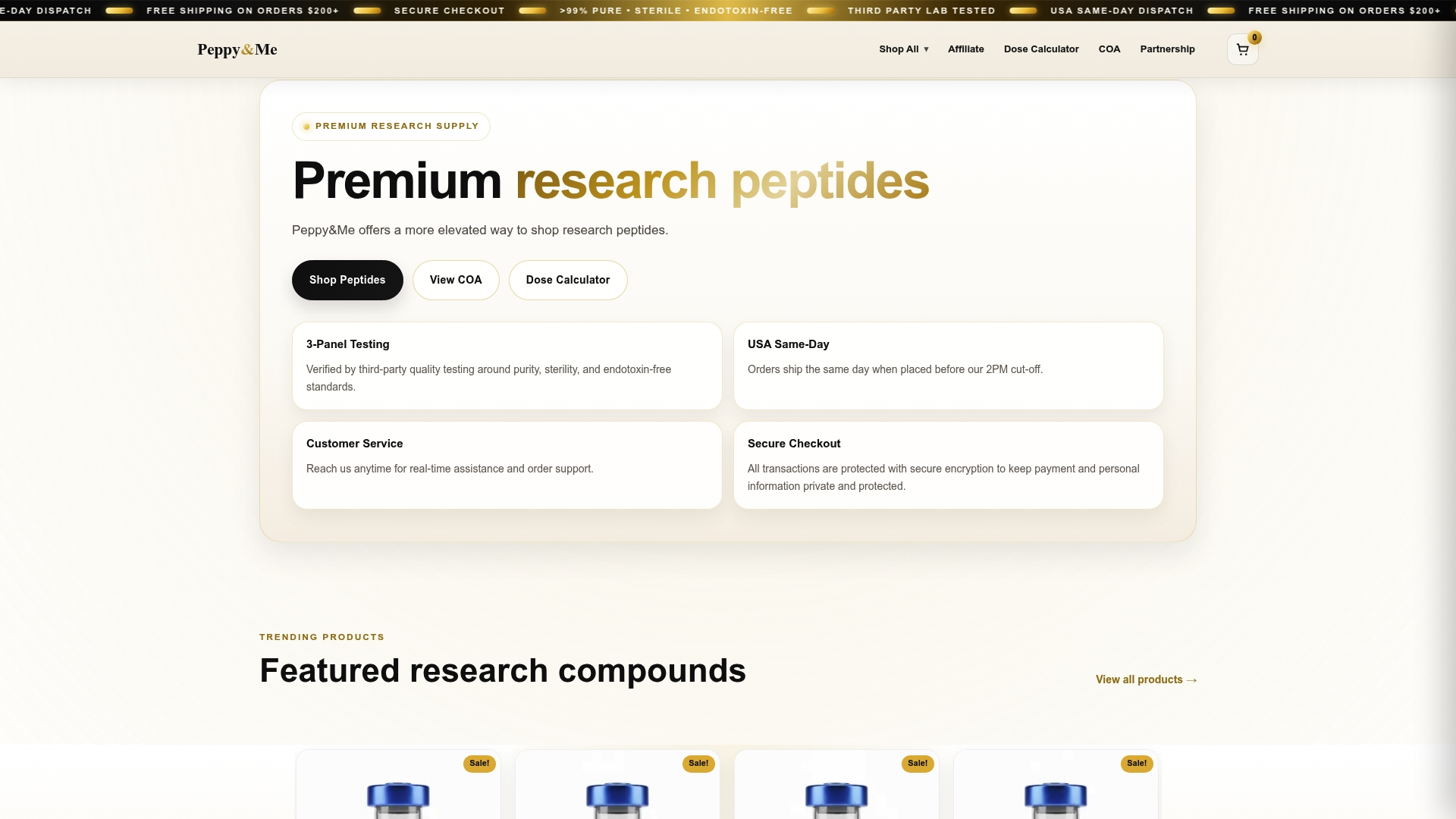
Peppy&Me provides authorized researchers and professionals with access to a curated catalog of research peptides that are third-party tested for purity, mass accuracy, endotoxins, sterility, and heavy metals. Every product carries traceable lot and batch numbers from manufacturer to warehouse, so researchers can verify quality at every step. For teams managing budget constraints without compromising standards, competitively priced peptide options are available with the same quality guarantees. Entrepreneurs and research organizations looking to scale their operations can also explore the private label partnership program for custom fulfillment solutions built on Peppy&Me’s established infrastructure.
Frequently asked questions
Can bacteriostatic water be injected by itself?
No, bacteriostatic water is a diluent for dissolving injectable drugs and should never be administered alone. It is not a therapeutic agent and has no clinical purpose outside of its role as a reconstitution solvent.
How long can I use a vial after opening if properly handled?
Most sources recommend usability up to 28 days when stored correctly and aseptic technique is consistently applied. Extending use beyond that window is not supported by the preservative’s documented capacity.
Why is bacteriostatic water contraindicated in neonates?
The benzyl alcohol preservative carries documented toxicity risks in neonates, including gasping syndrome risk associated with metabolic and cardiovascular complications. Preservative-free alternatives should always be used in neonatal contexts.
What is the difference between bacteriostatic water and sterile water?
Bacteriostatic water contains a preservative and supports multi-dose protocols, while sterile water contains no bacteriostat and is supplied only in single-dose containers. The presence or absence of that preservative defines every meaningful difference between the two products.
Are there any risks using bacteriostatic water in sensitive laboratory protocols?
Yes. In certain assays or sensitive research models, preservatives may interfere with enzyme activity, receptor binding, or cellular responses. Always verify diluent compatibility with your specific protocol requirements before proceeding.
Recommended
- Research Peptides | Peppy&Me
- Research Peptides | Peppy&Me
- 5-Amino-1MQ Research Compound: Selective NNMT Inhibitor for Metabolic Research | Peppy&Me
- Secure access setup guide: protect peptides & data in 2026
- How to mix peptides with bacteriostatic water safely
- Peptide research: Foundations, insights, and safety explained