Laboratory Handling Directions
- Store at controlled room temperature (15–25°C / 59–77°F)
- Protect from light and moisture during storage
- Use aseptic technique when handling compound
- Reconstitute with bacteriostatic water as appropriate
- Once reconstituted, refrigerate at 2–8°C (36–46°F)
- Document all handling procedures per laboratory protocols
Critical Compliance Notice
FOR RESEARCH USE ONLY. This product is sold strictly for in-vitro laboratory research, educational purposes, and scientific investigation. It is NOT intended for human or veterinary use. By purchasing this product, the buyer confirms they are a qualified researcher and assumes full responsibility for ensuring compliance with all applicable regulations.
Mechanism of Action
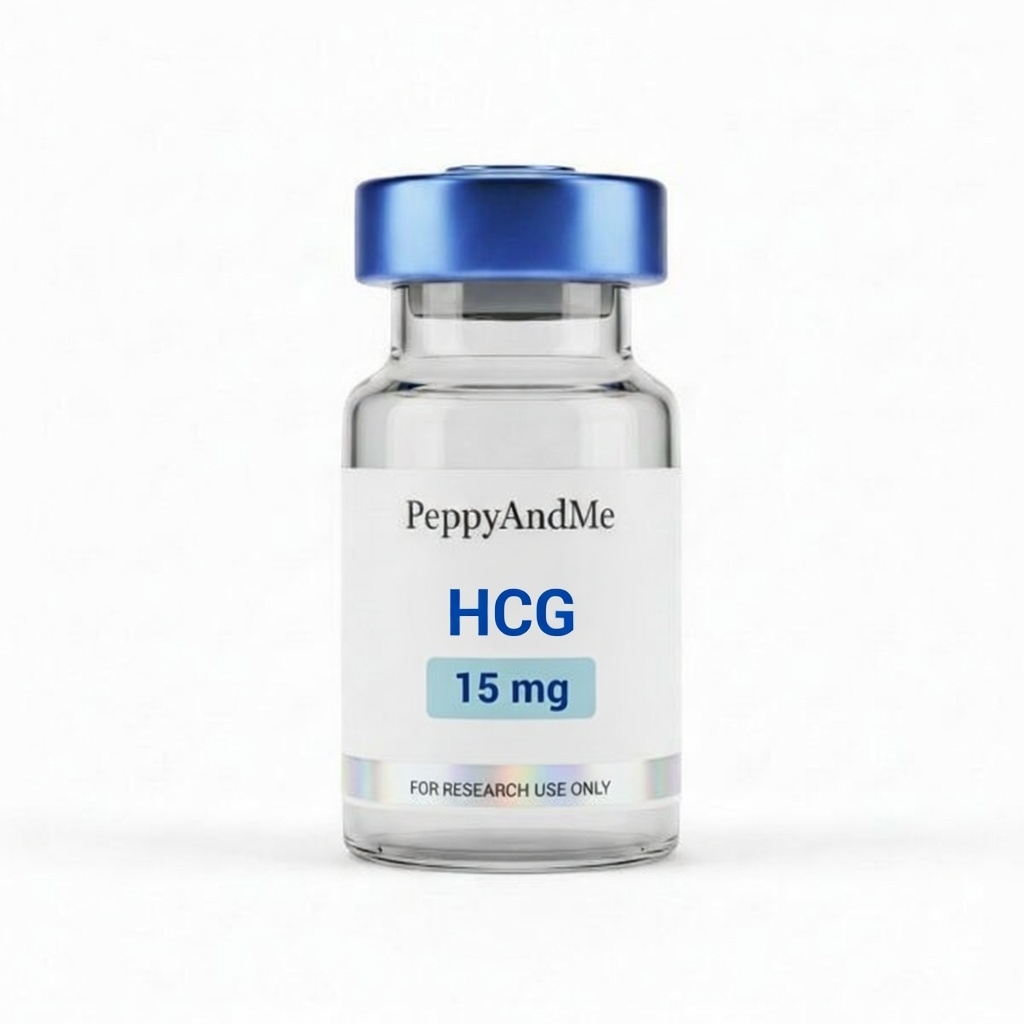
Human Chorionic Gonadotropin (hCG) is a heterodimeric glycoprotein hormone structurally analogous to luteinizing hormone (LH), binding with high affinity to the luteinizing hormone/choriogonadotropin receptor (LHCGR), a G protein-coupled receptor primarily on gonadal cells. This interaction activates Gs/Gq proteins, stimulating adenylate cyclase to increase cAMP levels, activating protein kinase A (PKA), and engaging MAPK/ERK pathways, which promote steroidogenesis (progesterone in females via corpus luteum support, testosterone in males via Leydig cell stimulation), inhibit luteolysis, and facilitate oocyte maturation, spermatogenesis, and endocrine homeostasis. Recent laboratory investigations (2024-2025) continue to demonstrate its pleiotropic effects, including enhanced endometrial receptivity through angiogenesis and cytokine modulation, improved spermatogenesis restoration in hypogonadal or androgen-suppressed models, and supportive roles in oocyte quality and embryo outcomes in assisted reproduction models, providing reassuring evidence of its precise orchestration of gonadal function and adaptive hormonal balance in challenged physiological states.
Research Applications
HPG axis modulation and gonadotropin (LH/FSH) dynamics studies
Ovulation induction and final oocyte maturation investigations
Spermatogenesis restoration in hypogonadotropic or non-obstructive azoospermia models
Corpus luteum support and progesterone production pathway analysis
Endometrial receptivity, implantation, and early pregnancy maintenance research
Male hypogonadism and testosterone biosynthesis evaluation
Assisted reproductive technology (ART) protocol optimization and fertility
Reviews
There are no reviews yet.