Mechanism of Action
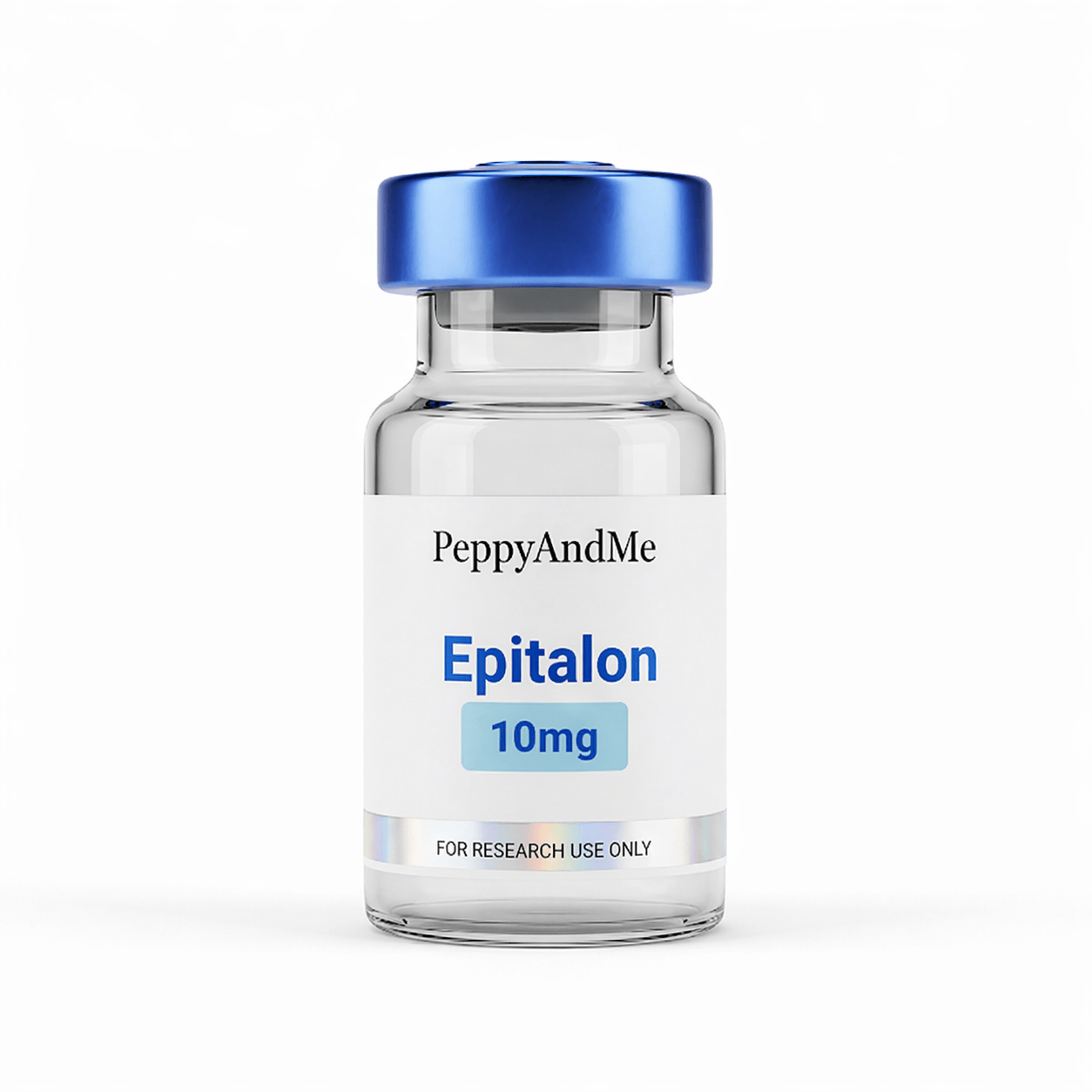
Epitalon research peptide is a synthetic tetrapeptide (Ala-Glu-Asp-Gly / AEDG) originally derived from Epithalamin, a bovine pineal gland extract, and represents one of the most extensively studied telomerase-activating compounds in biogerontology research. First identified in a pineal gland extract, the body naturally produces very small amounts of this peptide; it is the activation of telomerase that results in telomere length extension, establishing the primary geroprotective mechanism observed in mammalian cell studies. At the molecular level, Epitalon interacts with specific ATTTG and ATTTC DNA sequences via hydrophobic interactions and hydrogen bonds, with this binding sequence present multiple times in the promoter region of the telomerase gene, correlating with its capacity to initiate telomerase gene transcription. In normal somatic cell models, qPCR and immunofluorescence analysis demonstrated dose-dependent telomere length extension through hTERT mRNA upregulation and telomerase enzyme activity, with ALT (Alternative Lengthening of Telomeres) activation observed specifically in cancer cell lines. Beyond telomere biology, Epitalon has been investigated across five aging hallmarks — telomere maintenance, epigenetic regulation, oxidative stress resilience, immune recalibration, and circadian rhythm restoration — positioning it among the broadest-acting peptides studied in longevity science. Additionally, preclinical models indicate antioxidant enzyme upregulation, including superoxide dismutase and glutathione peroxidase activity, and pineal-mediated melatonin restoration in aged subjects, contributing to its multi-pathway research profile.
Research Applications
- Telomerase activation and hTERT expression studies in somatic cell models
- Telomere length maintenance and Hayflick limit investigations
- ALT (Alternative Lengthening of Telomeres) pathway research in cancer cell lines
- Epigenetic chromatin remodeling and DNA repair mechanism analyses
- Pineal gland function and melatonin circadian rhythm restoration studies
- Antioxidant enzyme activity and oxidative stress resilience evaluations
- Cellular senescence and replicative lifespan extension research
- Neuroendocrine aging and geroprotective bioregulator investigations
Laboratory Handling Directions
- Store at controlled room temperature (15-25°C / 59-77°F)
- Protect from light and moisture during storage
- Use aseptic technique when handling compound
- Reconstitute with bacteriostatic water as appropriate
- Once reconstituted, refrigerate at 2-8°C (36-46°F)
- Document all handling procedures per laboratory protocols
Critical Compliance Notice
FOR RESEARCH USE ONLY. This product is sold strictly for in-vitro laboratory research, educational purposes, and scientific investigation. It is NOT intended for human or veterinary use. By purchasing this product, the buyer confirms they are a qualified researcher and assumes full responsibility for ensuring compliance with all applicable regulations.
Scientific References
- Khavinson VK, Bondarev IE, Butyugov AA. Bull Exp Biol Med. 2003;135(6):590–592.
Anisimov VN, Khavinson VK. Biogerontology. 2010;11(2):139–149.
Al-Dulaimi S, Thomas R, Matta S, Roberts T. Biogerontology. 2025.
- Araj SK, Brzezik J, Mądra-Gackowska K, Szeleszczuk Ł. Int J Mol Sci. 2025;26(6):2691.
- Anisimov VN et al. Mech Ageing Dev. 2003;124(8-9):791–796.


Reviews
There are no reviews yet.