Mechanism of Action
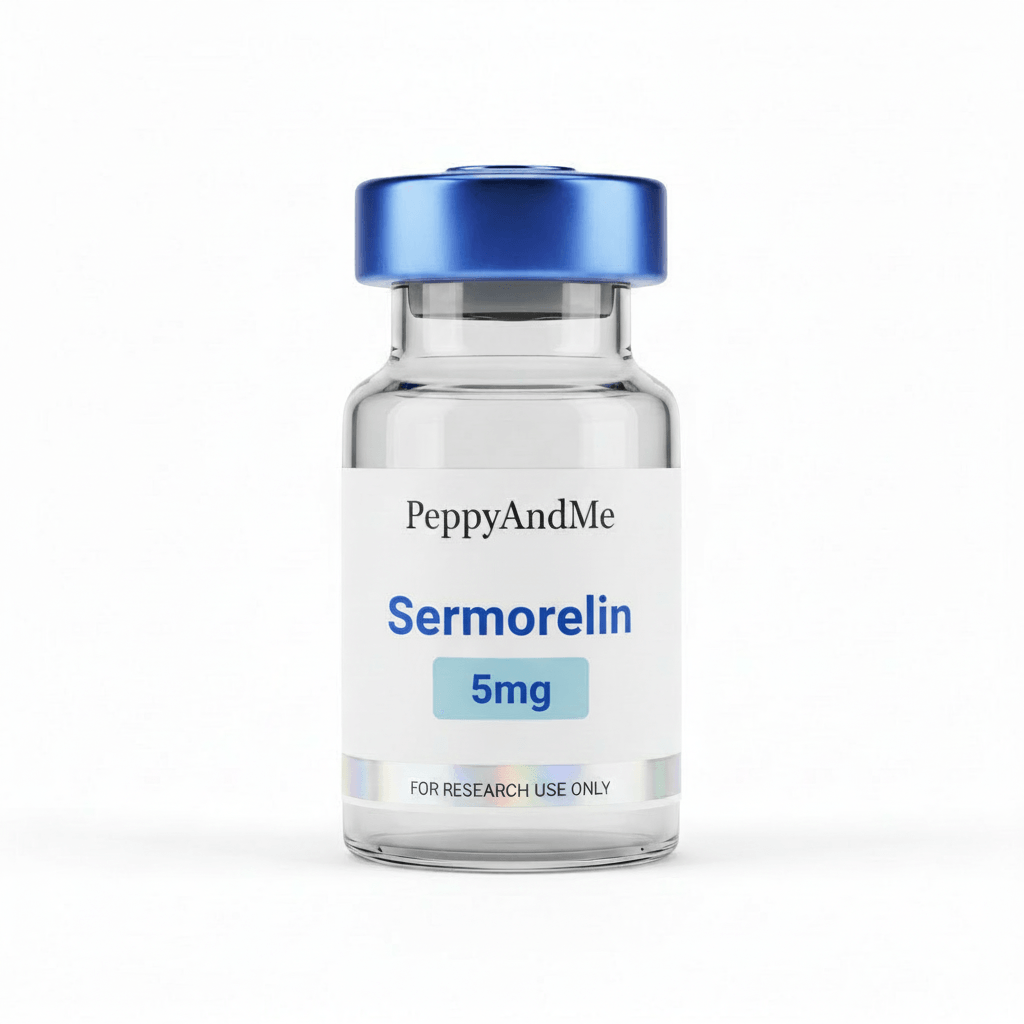
Sermorelin research peptide functions as a synthetic 29-amino acid analogue of growth hormone-releasing hormone (GHRH), representing the biologically active N-terminal fragment of the endogenous 44-amino acid hypothalamic peptide. It binds to the growth hormone-releasing hormone receptor (GHRHR) on the anterior pituitary, mimicking the effects of full-length GHRH to promote growth hormone secretion. Mechanistically, it operates within intact physiological feedback loops, maintaining normal GH pulsatility while modestly elevating overall growth hormone output — a profile that distinguishes it from direct exogenous HGH administration, which bypasses the pituitary entirely. Its effects are regulated by negative feedback through the inhibitory hormone somatostatin, which prompts the pituitary to release hGH in bursts that mirror natural hormone rhythms rather than the constant serum levels produced by recombinant GH injections. Furthermore, its structure retains affinity for the GHRH receptor and resistance to rapid enzymatic cleavage by dipeptidyl peptidase IV, with a brief plasma half-life of under 10–20 minutes, yet initiates cascades of intracellular cAMP production leading to GH transcription and secretion. Sermorelin also stimulates the production of insulin-like growth factor 1 (IGF-1) from the liver, which is thought to mediate many of GH’s downstream anabolic and metabolic effects, including lean mass accretion, fat metabolism, bone density, and tissue repair. These pituitary-preserving and feedback-respecting actions, observed across laboratory and preclinical models, distinguish Sermorelin as a tool for GH-axis investigation without the receptor downregulation risks associated with direct hormone replacement.
Research Applications
- Growth hormone-releasing hormone receptor binding and signal transduction studies
- Pulsatile GH secretion pattern and pituitary axis regulation research
- IGF-1 pathway modulation and downstream anabolic signaling investigations
- Somatostatin feedback loop and tachyphylaxis resistance evaluations
- Neuroendocrine aging and pituitary reserve assessment models
- Comparative GHRH analogue bioactivity and receptor affinity analyses
- Cognitive and neurological GH-IGF signaling pathway research
- Metabolic body composition and lean mass regulation studies
Laboratory Handling Directions
- Store at controlled room temperature (15-25°C / 59-77°F)
- Protect from light and moisture during storage
- Use aseptic technique when handling compound
- Reconstitute with bacteriostatic water as appropriate
- Once reconstituted, refrigerate at 2-8°C (36-46°F)
- Document all handling procedures per laboratory protocols
Critical Compliance Notice
FOR RESEARCH USE ONLY. This product is sold strictly for in-vitro laboratory research, educational purposes, and scientific investigation. It is NOT intended for human or veterinary use. By purchasing this product, the buyer confirms they are a qualified researcher and assumes full responsibility for ensuring compliance with all applicable regulations.


Reviews
There are no reviews yet.