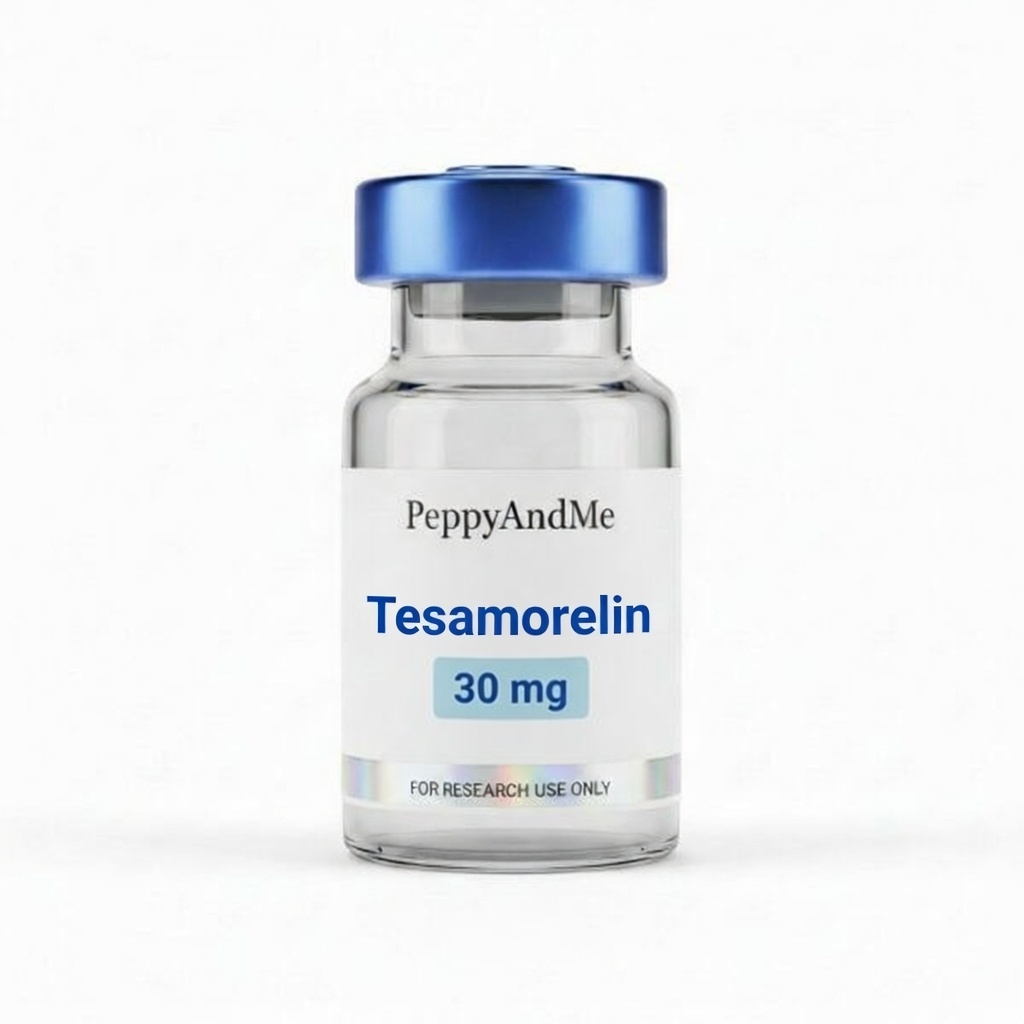
Laboratory Handling Directions
- Store at controlled room temperature (15–25°C / 59–77°F)
- Protect from light and moisture during storage
- Use aseptic technique when handling compound
- Reconstitute with bacteriostatic water as appropriate
- Once reconstituted, refrigerate at 2–8°C (36–46°F)
- Document all handling procedures per laboratory protocols
Critical Compliance Notice
FOR RESEARCH USE ONLY. This product is sold strictly for in-vitro laboratory research, educational purposes, and scientific investigation. It is NOT intended for human or veterinary use. By purchasing this product, the buyer confirms they are a qualified researcher and assumes full responsibility for ensuring compliance with all applicable regulations.
Mechanism of Action
Tesamorelin research peptide primarily binds to GHRH receptors on pituitary somatotroph cells, initiating adenylate cyclase-cAMP signaling cascades that promote pulsatile endogenous growth hormone (GH) secretion while preserving natural feedback mechanisms via IGF-1. Furthermore, this elevated GH stimulates hepatic IGF-1 production, enhances lipolysis in visceral adipose tissue, and supports lean body mass preservation through improved protein synthesis and mitochondrial function. Additionally, laboratory models show reductions in hepatic fat accumulation, favorable lipid profile shifts, and anti-inflammatory effects without significant glucose intolerance. These selective actions, observed in HIV-associated lipodystrophy models and metabolic assays, contribute to observed improvements in body composition and energy balance, with recent research emphasizing its reassuring profile for balanced GH axis modulation and targeted visceral fat pathway investigations.
Research Applications
-
Growth hormone axis regulation investigations
-
Visceral adipose tissue reduction mechanism analysis
-
IGF-1 signaling and lipolysis pathway studies
-
Hepatic fat metabolism and lipid profile evaluations
-
Body composition and lean mass preservation research
-
Endocrine-metabolic homeostasis examinations in lipodystrophy models
Reviews
There are no reviews yet.