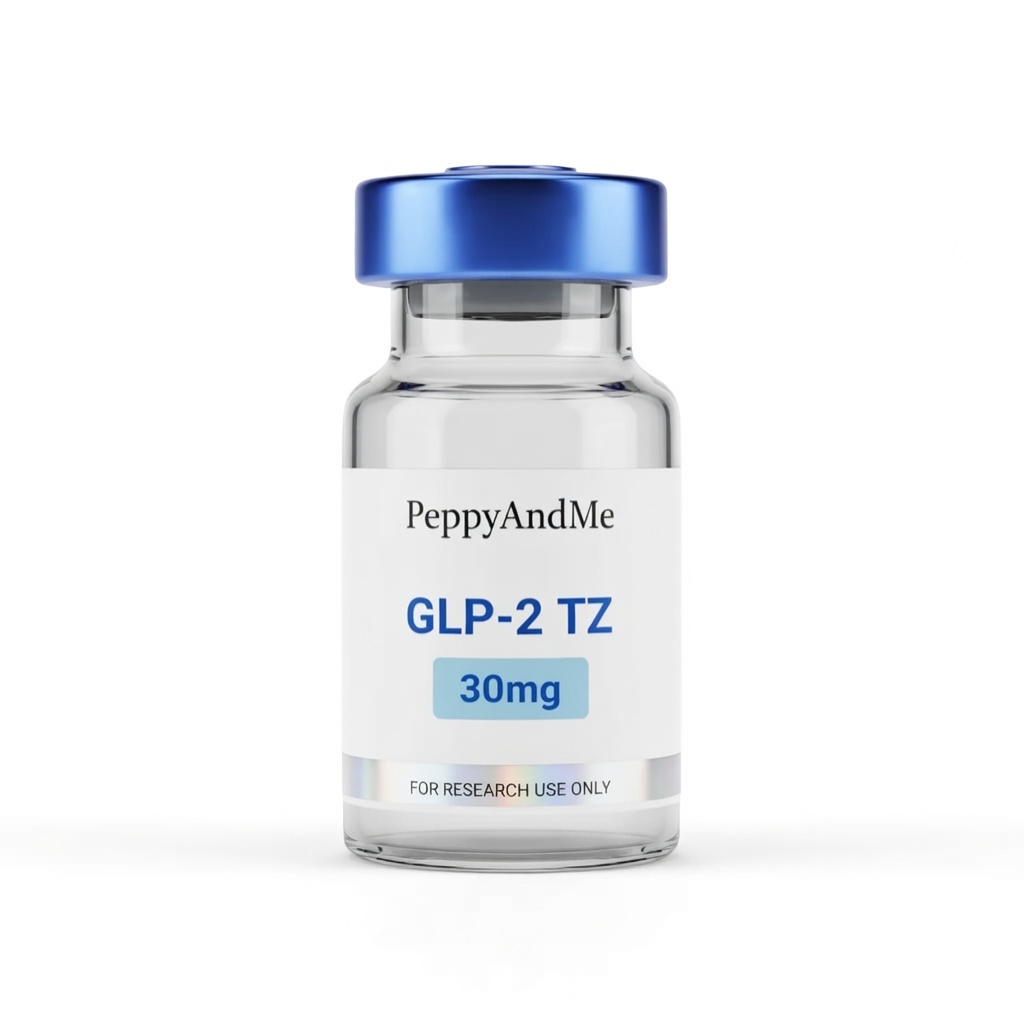
Laboratory Handling Directions
- Store at controlled room temperature (15-25°C / 59-77°F)
- Protect from light and moisture during storage
- Use aseptic technique when handling compound
- Reconstitute with bacteriostatic water as appropriate
- Once reconstituted, refrigerate at 2-8°C (36-46°F)
- Document all handling procedures per laboratory protocols
Critical Compliance Notice
FOR RESEARCH USE ONLY. This product is sold strictly for in-vitro laboratory research, educational purposes, and scientific investigation. By purchasing this product, the buyer confirms they are a qualified researcher and assumes full responsibility for ensuring compliance with all applicable regulations.
Mechanism of Action
GLP-2 Tirzepatide research peptide primarily functions as a dual incretin mimetic, binding with high affinity to GIP receptors (equivalent to native GIP) while showing biased agonism at GLP-2 receptors favoring cAMP signaling over β-arrestin recruitment, thereby promoting sustained insulinotropic effects with reduced receptor desensitization. Furthermore, it stimulates glucose-dependent insulin secretion from beta cells, suppresses glucagon release from alpha cells, delays gastric emptying, and centrally modulates hypothalamic pathways to reduce appetite and food intake. Additionally, in laboratory models, it enhances insulin sensitivity, improves lipid metabolism, reduces inflammation, and supports mitochondrial function, leading to greater glycemic control and weight regulation compared to selective GLP-2 agonists. These synergistic actions, observed in cellular assays, rodent models, and ex vivo islet studies, contribute to observed metabolic shifts, with recent research emphasizing its reassuring profile for balanced incretin pathway activation and superior outcomes in models of hyperglycemia and obesity.
Research Applications
-
Dual incretin receptor (GLP-1/GIP) activation investigation
-
Glucose-dependent insulin secretion mechanism analysis
-
Appetite suppression and central satiety signaling studies
-
Glucagon inhibition and hepatic glucose regulation evaluations
-
Insulin sensitivity and lipid metabolism pathway research
-
Metabolic homeostasis and anti-inflammatory effects examinations in obesity models
Reviews
There are no reviews yet.