Essential laboratory safety tips for secure peptide research
TL;DR:
- Peptide research requires meticulous safety practices, including hazard assessments, tailored chemical hygiene plans, and proper PPE use, to prevent violations and exposures. Implementing continuous protocol updates, universal biosafety measures, and accessible documentation fosters a culture of safety and compliance. Reliable sourcing and real-time safety engagement are essential for maintaining research integrity and researcher well-being.
Peptide research demands precision at every stage, and a single overlooked safety step can escalate into a regulatory violation, a chemical exposure incident, or worse, compromised research integrity. Labs working with synthetic peptides, reconstituted compounds, and associated reagents face a unique set of hazards that standard biology courses rarely cover in full. This article provides proven, regulation-backed safety practices drawn from OSHA, NIH, CDC, and leading university programs, giving laboratory professionals a clear framework for building and maintaining a safe, compliant peptide research environment from the ground up.
Table of Contents
- Assess and document hazards before every experiment
- The written Chemical Hygiene Plan: Your lab’s operational safety backbone
- Personal protective equipment (PPE) and correct doffing: Defense begins with you
- Biosafety and engineered controls: Universal practices every lab must enforce
- Laboratory safety tip comparison: What makes the biggest impact?
- Why tailored protocols, not generic rules, truly safeguard research
- Next steps: Connect with advanced tools and trusted guidance
- Frequently asked questions
Key Takeaways
| Point | Details |
|---|---|
| Always assess hazards | Proactively document every hazard for each experiment and update as protocols evolve. |
| Enforce tailored safety plans | Develop and implement a written Chemical Hygiene Plan unique to your lab’s chemicals and activities. |
| Prioritize PPE and proper doffing | Effective PPE use and correct removal are critical to prevent accidental exposures. |
| Follow universal biosafety and engineering controls | Routinely apply containment, biosafety protocols, and safe bio-waste disposal for ongoing compliance. |
| Favor protocol-driven over generic rules | Customize safety protocols to each agent, workflow, and situation for robust risk mitigation. |
Assess and document hazards before every experiment
Proactive hazard assessment is the foundation of every safe laboratory operation. Before any protocol begins, the research team must identify, evaluate, and record all potential risks connected to the materials and procedures in use. This is not a formality. It is a structured process that directly shapes which controls, ventilation strategies, and emergency plans are appropriate for each unique experiment.
The core principle here is that hazard documentation drives protective measures, including ventilation choices, PPE selection, and containment procedures. Every researcher assigned to a protocol should be familiar with the hazard profile of every material they will handle, not just the lead investigator.
Key steps in a sound hazard assessment process:
- Review Safety Data Sheets (SDS), formerly called Material Safety Data Sheets (MSDS), for every chemical, solvent, and reagent involved in the protocol. These documents contain critical information about flash points, toxicity levels, exposure limits, and emergency response procedures.
- Map the worst-case scenario for each step. If a container is dropped, a centrifuge rotor fails, or a gas line leaks, what happens next? This scenario-based thinking closes gaps that routine checklists often miss.
- Categorize hazards by type: chemical, biological, physical, or radiological. Peptide labs frequently encounter chemical hazards from solvents such as dimethyl sulfoxide (DMSO), acetonitrile, and trifluoroacetic acid (TFA), along with biological hazards when working with cell cultures or recombinant materials.
- Determine ventilation needs based on chemical volatility, carcinogenic potential, and concentration. Fume hoods are required for volatile organics and corrosives. General room ventilation is insufficient for many reagents used in peptide synthesis and purification.
- Record all findings in a standardized format that is accessible to every team member. Verbal briefings are not sufficient as the only record.
Hazard assessments must be living documents. Any change to the protocol, including switching to a different solvent, scaling up volume, or adding a new analytical step, requires a reassessment. This practice aligns with peptide lab safety best practices that treat documentation as an ongoing obligation rather than a one-time prerequisite.
Pro Tip: Create a standardized one-page hazard summary template for each protocol. Require researchers to complete and sign it before beginning any new experiment. Keep completed forms in a shared digital folder with version control so that outdated assessments are never confused with current ones.
Ensuring secure peptide access extends beyond digital security. It includes physical access controls to materials documented as hazardous, so only authorized, trained personnel handle them.
The written Chemical Hygiene Plan: Your lab’s operational safety backbone
A Chemical Hygiene Plan, commonly abbreviated as CHP, is far more than a binder collecting dust on a safety shelf. It is a legally required, facility-specific document that defines how your lab identifies, controls, and monitors hazardous chemical exposures. Under OSHA’s laboratory standard, every laboratory using hazardous chemicals must maintain a written CHP that includes specific procedures for protecting workers and must be tailored to the actual chemicals and activities in that facility.
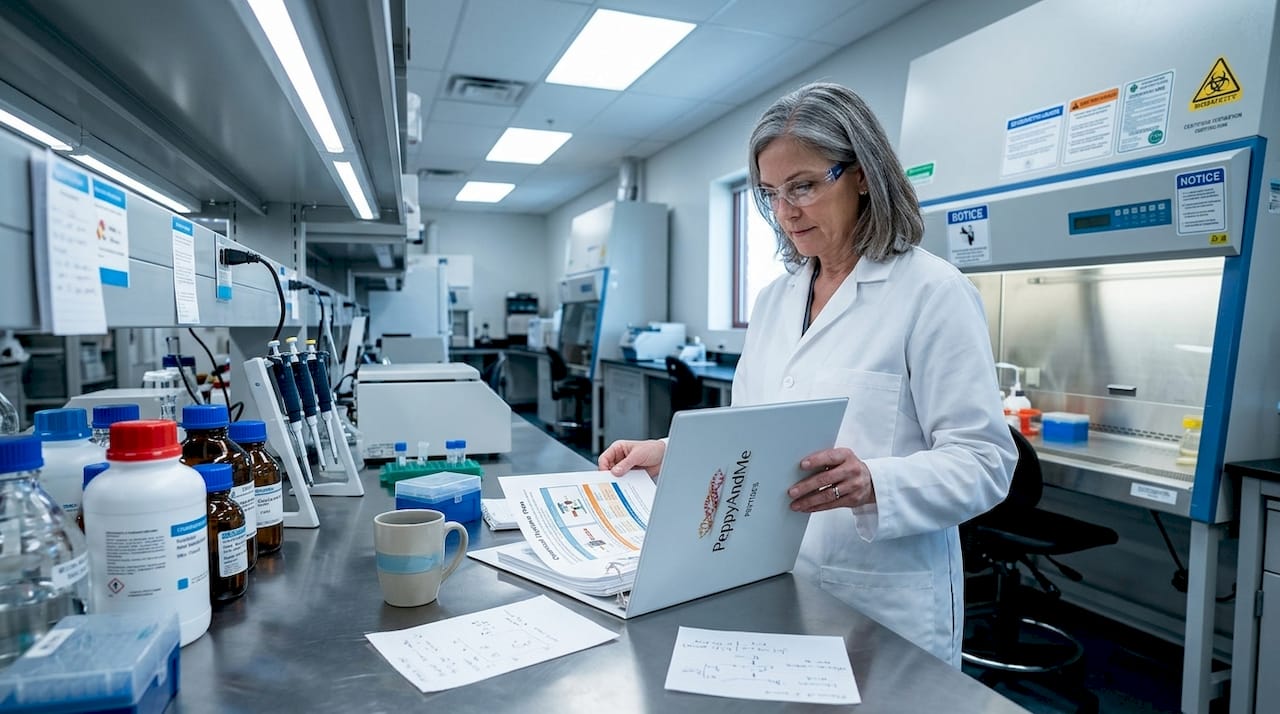
Generic, off-the-shelf CHPs fail on this point entirely. OSHA’s requirement is explicit: the plan must reflect your lab’s specific reagents, workflows, and exposure risks. A CHP written for a clinical chemistry lab cannot simply be reused for a peptide synthesis lab without significant revision.
The essential components of an effective CHP include:
- A complete inventory of all hazardous chemicals used or stored in the facility, cross-referenced with current SDS documents.
- Specific standard operating procedures (SOPs) for handling each category of hazardous material, including peptide synthesis reagents, organic solvents, and biological agents.
- Criteria for determining when a particular operation requires additional control measures beyond standard PPE, such as closed-system handling or enhanced respiratory protection.
- Designation and responsibilities of a Chemical Hygiene Officer (CHO), the individual responsible for ensuring the CHP is implemented, updated, and communicated to all lab personnel.
- Provisions for medical consultation and surveillance when exposures occur or are suspected, including clear escalation pathways.
- Training requirements, specifying that all workers must complete safety training before performing any unsupervised laboratory work involving hazardous chemicals.
- A scheduled annual review process, with documented dates and signatures from the CHO and principal investigator.
“For chemical exposure control and compliance in practice, many universities’ lab safety programs explicitly connect CHP requirements to OSHA 29 CFR 1910.1450 and emphasize training participation for lab workers before unsupervised work and at regular intervals thereafter.”
The CHO role deserves particular attention. This person is not simply a safety bureaucrat. They are the operational hub of your entire chemical safety program. In smaller labs, this role may fall to a senior researcher or lab manager. In larger research facilities, it may be a dedicated environmental health and safety professional. Regardless of who holds the title, they need both authority and resources to keep the program functional.
Accessibility matters too. If your CHP lives in a password-protected folder that only one person can access, or if it is stored in a cabinet in a room that is locked after hours, it fails its primary purpose. Every team member must be able to reach the plan immediately, whether during routine operations or during an emergency at 11 PM. This connects directly to lab safety procedures that prioritize real-time access to critical safety documentation.
Personal protective equipment (PPE) and correct doffing: Defense begins with you
Personal protective equipment is the last line of defense between a researcher and a chemical or biological hazard. This framing is important. PPE should never be treated as the primary control strategy. Engineering controls, substitution, and procedural safeguards should reduce exposure risk first. But when residual risk remains, and in peptide research it almost always does, PPE coverage and proper glove removal are non-negotiable.
Core PPE requirements for peptide research labs:
- Lab coat or gown: Must be long-sleeved, appropriate to the risk level, and resistant to chemical splash. Disposable gowns are preferred when working with highly hazardous reagents such as carcinogenic solvents or biological materials. Never wear a lab coat outside the laboratory.
- Gloves: Nitrile gloves are the standard baseline for peptide labs. For extended contact with chlorinated solvents or concentrated acids, consult glove compatibility charts. Double-gloving is recommended when handling high-potency compounds or when working in high-throughput environments. Change gloves immediately if they are torn, punctured, or visibly contaminated.
- Safety eyewear: Chemical splash goggles, not just safety glasses, are required when working with liquids that pose splash risk. This includes most liquid-phase peptide synthesis work, HPLC fraction collection, and lyophilization loading.
- Respiratory protection: Standard surgical masks do not protect against chemical vapors. When working with volatile organics such as TFA or DCM (dichloromethane), a chemical fume hood provides the primary protection. If hood use is not possible, a properly fitted respirator with organic vapor cartridges is required.
The most commonly underestimated PPE risk is the removal step. Research consistently shows that contamination events occur during glove removal, not during handling. The technique matters enormously. Pinch the outside of one glove near the wrist, peel it off while turning it inside out, hold it in the gloved hand, then slide two fingers under the cuff of the second glove and peel it off over the first, containing both gloves together. Never touch the outside surface of a used glove with bare skin.
Pro Tip: Post a laminated visual guide for glove removal technique at every workstation that uses chemical or biological materials. Brief, visual reminders outperform annual training videos when it comes to real-time behavior change.
Establishing and practicing effective PPE practices as formal SOPs, not informal habits, ensures that every team member follows the same procedure regardless of their experience level. Handwashing after PPE removal must also be built into the SOP, not treated as optional.
Biosafety and engineered controls: Universal practices every lab must enforce
Engineering controls and universal biosafety practices form the structural layer of laboratory safety. While PPE protects the individual, engineering controls protect the entire environment. In peptide research, these two categories of protection must work together, not independently.
The NIH, OSHA, and CDC biosafety framework establishes baseline universal practices that apply across all research laboratories, regardless of the biological risk level assigned to the work. These are non-negotiable minimums.
Universal biosafety practices every peptide lab must enforce:
- No eating, drinking, smoking, or applying cosmetics in any area where hazardous materials are used or stored. This rule exists because many chemical and biological hazards can be ingested on contaminated hands without any obvious contact event.
- Mouth pipetting is absolutely prohibited. This practice was common in earlier decades but has been recognized as a direct route of exposure to pathogens and toxic chemicals. Pipetting aids, bulb pipettes, and electronic pipettors are the only acceptable alternatives.
- Handwashing is required after any contact with biological or chemical materials and before leaving the laboratory, even when gloves were worn throughout the procedure.
- Biosafety cabinets (BSCs) must be used for any work with biological agents at Biosafety Level 2 or higher, for work with volatile sensitizing compounds, and for procedures that generate aerosols. Class II Type A2 BSCs are the most common in molecular biology and peptide research labs.
- Waste segregation must be enforced rigorously. Chemical waste, biological waste, sharps, and general laboratory waste require separate labeled containers with appropriate secondary containment.
The NIH Guidelines provide additional specific containment requirements for work involving recombinant or synthetic nucleic acid molecules, which may be relevant when peptide research intersects with gene expression studies or receptor binding assays.
| Control type | Examples | Primary protection | Regulatory basis |
|---|---|---|---|
| Engineering controls | Fume hoods, BSCs, closed rotors | Laboratory environment | OSHA, NIH Guidelines |
| Administrative controls | SOPs, training, access restrictions | Procedural compliance | OSHA 29 CFR 1910.1450 |
| PPE | Gloves, goggles, lab coats | Individual researcher | OSHA, institutional policy |
| Biosafety practices | No mouth pipetting, handwashing | Cross-contamination prevention | CDC, NIH, institutional |
Regular inspection and certification of biosafety cabinets is a requirement that labs frequently overlook. BSCs must be certified annually by an accredited technician and recertified whenever they are moved, repaired, or returned to service after filter replacement. An uncertified BSC provides no validated protection and creates a false sense of security.
Laboratory safety tip comparison: What makes the biggest impact?
With multiple safety systems to manage simultaneously, lab managers and principal investigators benefit from a clear comparison of how each major practice category contributes to overall safety and compliance. This table summarizes the key categories covered in this article, ranked by their regulatory necessity and practical risk reduction value.
| Safety practice | Regulatory requirement | Risk reduction impact | Ease of implementation | Key resource needed |
|---|---|---|---|---|
| Hazard assessment and SDS review | Required before work begins | Very high (exposure prevention) | Moderate | SDS database, template |
| Written Chemical Hygiene Plan | OSHA-mandated for all labs | Very high (legal compliance) | Moderate to high | CHO, annual review cycle |
| PPE selection and doffing SOPs | OSHA, institutional policy | High (individual protection) | Low (once trained) | PPE inventory, visual guides |
| Biosafety cabinet use | NIH, CDC, BSL-specific | High (environmental control) | Moderate | Certified BSC, annual inspection |
| Universal practices (no food, handwashing) | Universal, regulatory baseline | High (cross-contamination) | Low (behavioral) | Training, signage |
| Bio-waste segregation | EPA, state regulations | Moderate to high | Low to moderate | Labeled containers, disposal contract |
Each category reinforces the others. A lab with a strong CHP but poor PPE compliance still carries significant exposure risk. A lab with certified biosafety cabinets but no documented hazard assessment process operates without a systematic understanding of what those cabinets are actually protecting against. For detailed peptide lab safety planning, treating these categories as interconnected rather than independent is what separates a truly safe lab from one that is merely technically compliant.
Why tailored protocols, not generic rules, truly safeguard research
There is a persistent temptation in laboratory safety management to adopt a standardized checklist and consider the job complete. This approach is understandable. Safety compliance carries paperwork burdens, and ready-made templates seem to solve that problem efficiently. But the evidence does not support this strategy, and neither does the regulatory framework that governs it.
The CDC’s strong lab safety program framework and the Biosafety in Microbiological and Biomedical Laboratories (BMBL) guidance both make a consistent point that many labs misread: these documents are advisory frameworks, not complete safety programs. They provide the structure for thinking, not the answers for your specific situation. A biosafety protocol written for working with live attenuated viruses cannot be directly applied to solid-phase peptide synthesis without substantive revision.
Real safety culture is built on three principles that generic checklists cannot deliver. First, agent-specific and task-specific risk assessment. The hazard profile of acetonitrile at one milliliter differs meaningfully from acetonitrile at one liter. The risk profile of a synthetic peptide with no known bioactivity differs from a receptor-active peptide used in cell-based assays. Generic protocols flatten these distinctions. Second, regular protocol updates tied to real changes in the work. When a new reagent enters the lab, when a researcher scales up a synthesis, or when new literature identifies a previously uncharacterized hazard in a compound, the safety protocol must be revised before work continues, not at the next annual review. Third, team engagement. The most precisely written safety document fails if the people using it do not understand why each rule exists. When researchers understand the actual hazard mechanisms behind each procedure, they apply better judgment in novel situations that no checklist anticipated.
The labs that sustain the strongest safety records are not the ones with the longest safety documents. They are the ones where the team treats evidence-based lab safety as a shared responsibility, where questions are welcomed, near-misses are reported without fear, and protocols are treated as tools rather than obstacles. This requires active leadership from principal investigators and lab managers, not just compliance from junior researchers.
The most practical shift a lab can make is moving from annual safety reviews to a continuous improvement model. When a researcher encounters a situation that does not fit the existing SOP, that gap should trigger an immediate protocol revision, not a workaround. This dynamic approach does more to prevent incidents than any static checklist ever will.
Next steps: Connect with advanced tools and trusted guidance
Applying the safety practices in this article is the right first step, and having access to reliable, well-documented research materials is equally critical to maintaining a compliant laboratory environment. Cutting corners on peptide sourcing creates safety risks and research validity problems that no amount of procedural caution can fully offset.
Peppy&Me provides authorized researchers with access to third-party tested peptides, with documented purity, mass accuracy, endotoxin levels, sterility, and heavy metal screening for every lot. The platform’s lab best practices guide offers research-specific handling and protocol guidance, while the built-in research peptide dosing tool supports precise reconstitution and concentration calculations that reduce both handling errors and material waste. For researchers managing tight budgets without compromising quality, explore discount research peptides available through the platform with full quality documentation intact.
Frequently asked questions
What is the minimum PPE required for peptide research labs?
Lab coats or gowns, gloves, and safety eyewear are the essential minimum PPE for peptide labs. Correct PPE coverage and proper removal techniques are required to prevent self-contamination during and after work.
How often should laboratory safety training be completed?
Safety training should be completed before any unsupervised work begins and renewed at least annually in research labs. University-based CHP programs treat both initial and annual training as required components of laboratory compliance, not optional refreshers.
What is a Chemical Hygiene Plan (CHP) and why is it needed?
A CHP is a written safety program required by OSHA that details procedures for protecting workers from hazardous chemical exposures and must be customized to the specific chemicals and activities in each laboratory.
What are examples of engineering controls in laboratory safety?
Common engineering controls include fume hoods, biosafety cabinets, and closed-top centrifuge rotors. The Stanford Biosafety Manual identifies these as core components of a properly structured containment strategy alongside universal practices like prohibiting mouth pipetting and food in work areas.
Why can’t one-size-fits-all protocols guarantee lab safety?
Because risk varies with agents, operations, and scale, no single template can address every real-world hazard scenario. BMBL and CDC guidance both emphasize that biosafety documents are advisory frameworks requiring protocol-driven, facility-specific risk assessment rather than direct adoption.